
Why K-pop idols wear Acubi: The rise of Korean quiet cool
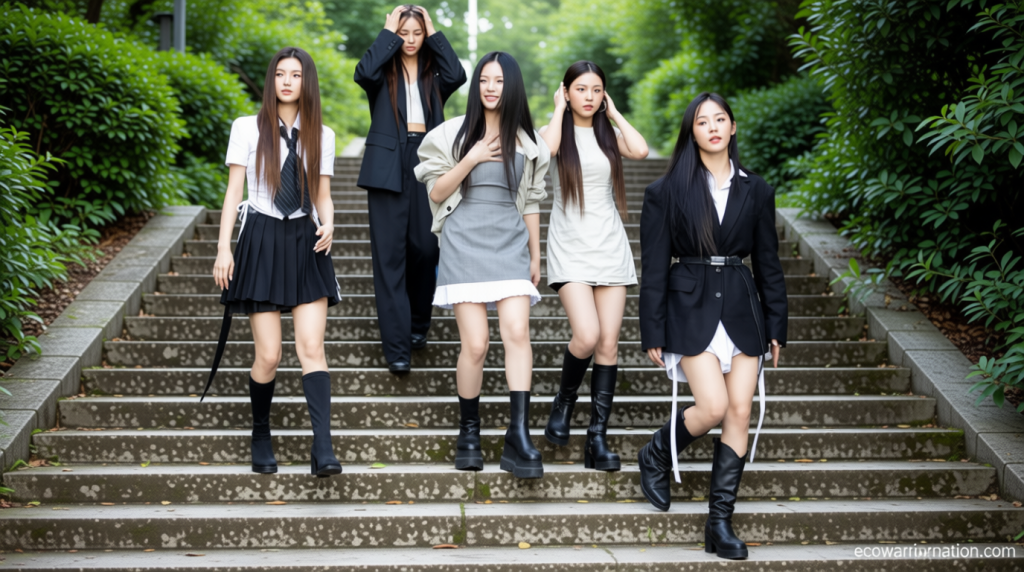
Why K-pop Idols Wear Acubi: The Rise of Korean Quiet Cool
Origins and Characteristics
Acubi, a distinctive streetwear style originating in Seoul, has gained international traction as a fresh alternative to Western fashion norms. Defined by its loose fits and subdued color palettes, the trend contrasts with the sharp lines typical of American and European designs. Its foundation lies in the Acubi Club label, which first popularized the aesthetic. The style blends Y2K influences with a more practical approach, favoring neutral tones over flashy metallic finishes.
Emerging around 2021, Acubi’s global reach expanded through performances by K-pop groups such as Blackpink, NewJeans, and Aespa. These acts showcased the look at fashion events, elevating its status beyond local circles. “K-pop functioned less as the origin and more as an accelerator,” said Heewon Yuh, a youth fashion strategist at WGSN. “It transformed a regional trend into an international phenomenon.”
Digital-Age Appeal
Social media platforms like TikTok and Instagram have become vital in spreading Acubi’s influence. The #Acubi hashtag sees over 65,000 posts daily on TikTok and 87,000 on Instagram. Users share tutorials and personal interpretations, making it simple for fans to emulate the style. One creator described the aesthetic as “emphasizing the art of layering basics” to craft unique outfits.
Jaana Jätyri, CEO of Trendstop, highlighted the trend’s adaptability: “Acubi is very much a digital-age aesthetic. It photographs well, layers easily, and fits seamlessly into everyday content creation.” The emphasis on modularity aligns with a growing preference for versatile clothing, especially during times of economic and social uncertainty.
Korean Wave and Cultural Influence
The popularity of Acubi reflects the broader global impact of “hallyu,” or the Korean wave. Professor Dal Yong Jin of Simon Fraser University noted that Korean culture, including fashion, beauty, and food, is highly appealing to international audiences. This demand extends to travel, with many seeking to experience the culture firsthand.
Jin, an expert on South Korea’s cultural reach, attributed the trend’s growth to institutional backing. Government and corporate efforts promote hallyu content, enhancing Korea’s global image and economic appeal. While some critics worry about cultural homogenization, the trend underscores the country’s influence on global style.
Google Trends data reveals a surge in Korean fashion searches in early 2026, coinciding with K-pop appearances at London Fashion Week. Stray Kids’ Seungmin and Girls’ Generation’s Yoona graced Burberry’s FW26 closing show, sparking global interest. The rise of private-label brands like Musinsa Standard also mirrors this trend, as their affordable basics align with Acubi’s principles.
Fast-fashion retailers worldwide are capitalizing on the style, offering Acubi-inspired staples. Shein, based in Singapore, and Minga London, a UK-based label, have embraced the aesthetic, signaling its commercial viability. As the trend continues, it remains a symbol of Korea’s evolving role in global fashion and culture.
