
China’s energy fortress was built to withstand just this type of oil shock
China’s Energy Fortress Faces Its Hardest Oil Crisis Yet
Over the past decade, Xi Jinping has driven significant changes in China’s economic landscape with a singular focus: securing energy independence. The nation has accelerated its shift to renewable sources, expanding solar, wind, and hydropower initiatives, while deepening exploration in both onshore and offshore oil fields. Strategic alliances with energy partners have also bolstered domestic supply chains, aiming to reduce dependence on foreign fuels and shield the economy from global disruptions.
A Crucible for Energy Security
The ongoing conflict between the U.S. and Israel in the Gulf has intensified the challenge for China’s energy self-reliance. This crisis marks the most severe trial of Xi’s long-term vision to build an energy-secure nation. While many Asian countries scramble for dwindling supplies, China has maintained substantial oil reserves, supported by a manufacturing sector increasingly powered by domestic resources and a rapidly growing electric vehicle industry.
“China’s capacity to endure the current energy shocks is a validation of its efforts to enhance security,” noted Erica Downs, a senior research scholar at Columbia University’s Center on Global Energy Policy. “They can now reflect on their decisions and affirm they were correct.”
Strategic Diversification
Since becoming a net energy importer in the 1990s, China has identified reliance on the Middle East as a critical risk. Key maritime routes, such as the Strait of Malacca, have been viewed as potential targets for adversaries seeking to cut off supply. To mitigate this, the country has invested heavily in land-based pipelines, transporting oil and gas from Central Asia, Russia, and Myanmar. Russia’s surge to the top of China’s supplier list followed its invasion of Ukraine, further diversifying the nation’s energy mix.
Under Xi’s leadership, the emphasis has shifted from merely expanding sources to reducing overall dependence on external markets. The strategy includes preparing for worst-case scenarios, ensuring that the energy sector remains resilient amid global volatility. This approach has spurred a dual push: increasing green energy production and maintaining fossil fuel reserves as a safety net.
Domestic Resilience and Fossil Fuel Reality
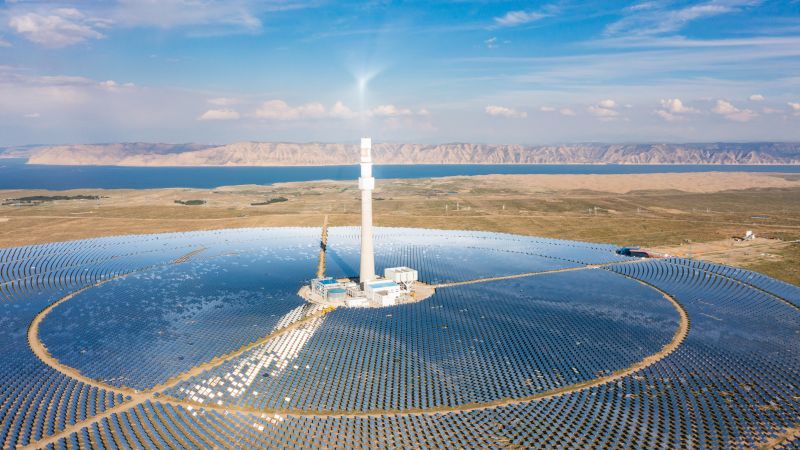
China’s renewable energy expansion has gained momentum, with massive solar and wind installations now dotting remote regions and coastal areas. Domestic battery manufacturing has also advanced, enabling electric cars to rapidly replace traditional gasoline vehicles on highways. However, the nation’s energy infrastructure still depends on coal, which provides a steady supply of electricity to support both industry and renewables.
Despite its progress, China remains reliant on oil imports for 70% of its needs and natural gas for about 40%. The recent surge in jet fuel prices has led to higher airline fares and some cancellations, while elevated commodity costs have impacted factory gate prices. State-led interventions have helped stabilize gas and diesel rates, but the economic strain from the Gulf war continues to affect the energy sector.
Beijing’s energy strategy reflects a balance between innovation and pragmatism. While pushing for green technologies like nuclear fusion and hydrogen, it also continues to explore oil and gas reserves in deserts and offshore regions, ensuring a diversified and robust supply system. The outcome of this dual approach will shape China’s role in the evolving global energy landscape.
