

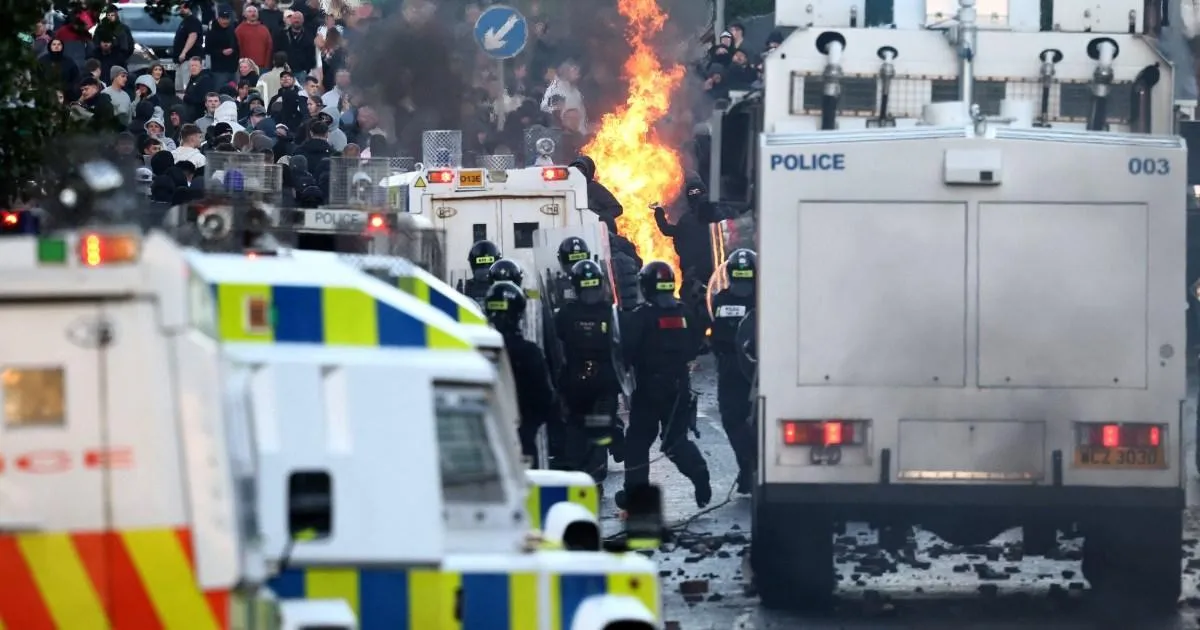
This is a new kind of fear we are living through, one that is being encouraged
This is a new kind of fear – Residents in Belfast are grappling with an unprecedented surge in anti-immigrant tensions, leaving even long-time expatriates shaken. An Indian family who settled in the UK after a two-decade stint in the Middle East expresses deep concern over the recent riots, which have transformed their sense of security. They had anticipated a harmonious society and a stable living environment, yet the current climate has instilled a profound unease.
The family’s relocation to the UK was driven by hopes for a better quality of life, but the escalating fear has turned their expectations upside down. While they had previously encountered sporadic acts of racism in their homeland, the scale and intensity of the violence in Belfast now feel unmanageable. The riots have sparked a new kind of anxiety, one that is not only fueled by prejudice but also amplified by deliberate political strategies.
A shift in the nature of division
Historically, anti-immigrant unrest has occurred across nations, and communities have often found ways to mend social fractures. However, the current unrest appears uniquely aggressive, with far-right ideologies acting as a catalyst. These groups are no longer content with isolated incidents; instead, they are systematically weaponising every minor conflict to stoke hatred.
“Instead of letting communities heal, these groups are actively igniting every sensitive issue to fuel the fire,” the reader explains, highlighting the deliberate targeting of immigrant communities. The fear is no longer just about discrimination but about the potential for immediate violence, regardless of an individual’s immigration status.
This transformation has created a situation where even a single act by an immigrant can trigger widespread panic. The family now lives in constant dread that their safety could be compromised by a crime involving someone from a different background. The line between legal and illegal immigrants seems increasingly irrelevant in the eyes of the public.
Blaming the youth
The reader laments the role of young people in perpetuating this fear. They note that many of the rioters appear to be teenagers, some of whom may not fully grasp the geography of the countries they’re targeting. “It wouldn’t surprise me to learn they don’t know or even care where Somalia or Sudan are on the world map,” they say.
There’s also a sense of frustration toward parents who fail to monitor their children’s actions. The reader questions how these parents can overlook the influence of social media, which seems to be shaping the attitudes of the youth. “What the hell are they doing to monitor their kids’ whereabouts or actions?” the family asks, reflecting a broader concern about parental accountability.
Tools of the trade
One reader suggests a practical solution to combat the riots: using water cannon with a permanent, brightly coloured dye. This would not only make rioters more visible but also ruin their designer clothes, serving as a deterrent. “It would be a better deterrent than just giving people a bit of a soaking,” they argue, emphasizing the need for tangible measures to address the unrest.
Shifting blame
Another reader criticises the government for prioritising policies that disadvantage certain groups. They mention Treasury chief secretary Lucy Rigby’s statement that student loan interest rates won’t be reduced, arguing that this decision unfairly targets young people who are working to improve their futures. “Our young people who have gone to university to better themselves and grow the economy are now having to pay for the people who have done nothing,” they say, calling it a disgraceful policy.
“What a disgraceful country we live in,” the reader concludes, expressing their frustration with the current political climate and its impact on immigrant communities.
The role of media
While some may see the media as a source of panic, others argue it plays a crucial role in exposing the truth. A reader highlights the importance of filming incidents, such as the Belfast stabbing, to ensure accountability. “Julian (MetroTalk, Wed) despairs at those who filmed the Belfast stabbing on their mobile phones,” they say, noting that the woman who captured the event did the only thing she could to document the violence.
The act of recording not only provides evidence for prosecution but also prevents incidents from being swept under the rug. “Filming these things can help identify individuals involved and provide evidence later on,” the reader adds, praising the power of technology in holding people responsible.
Political rhetoric and perception
A final comment addresses the role of political language in shaping public sentiment. The reader criticises shadow equalities minister Claire Coutinho for accusing South Wales Police of bias, pointing out that the police’s actions are a logical response to the growing hostility against Muslims. “The authorities are simply being vigilant in a time when social media is rife with anti-Muslim rhetoric,” they argue, countering the minister’s claim.
The reader also takes issue with the media’s portrayal of these events, suggesting that the focus on blame often overshadows the broader social context. They conclude by questioning whether the media is perpetuating fear or merely reflecting the anxieties of the public.
As the situation continues to unfold, the family and other readers are left wondering how long this new kind of fear will persist. The questions raised are not just about the riots but about the underlying attitudes that fuel them. In a world where misinformation spreads quickly, the struggle for peace and understanding has become more complex than ever.
Are we witnessing a new era of intolerance, or is this merely a reflection of our evolving societal dynamics? The answers may lie in the way we choose to respond to fear, both in our actions and our words.