
‘The Godfather’ descended on a tiny Sicilian village, and it’s never been the same
‘The Godfather’ Altered a Small Sicilian Village Forever
A Film’s Arrival Sparked a Lasting Transformation
In 1971, Frances Ford Coppola cast Enza Trimarchi as an extra in *The Godfather*, an event that reshaped her rural Sicilian village of Savoca. At 22, Trimarchi had no idea the film would redefine her community for generations. The pivotal wedding scene of Michael Corleone and Apollonia Vitelli was shot in Savoca’s hilltop setting, drawing attention to the village and its traditions. For Trimarchi, the filming marked a transition from youth to adulthood, as the arrival of Coppola and stars like Al Pacino introduced a new era of change.
“I was approached by one of Coppola’s crewmen who asked if I wanted to work,” Trimarchi, now 76, told CNN. “So many people from across the province had come to be selected. I was enthusiastic, so young. There was nothing in Savoca, we had no running water and drank the cistern’s rainwater. We didn’t even have a television.”
Legacy of the Movie Lives On in Savoca
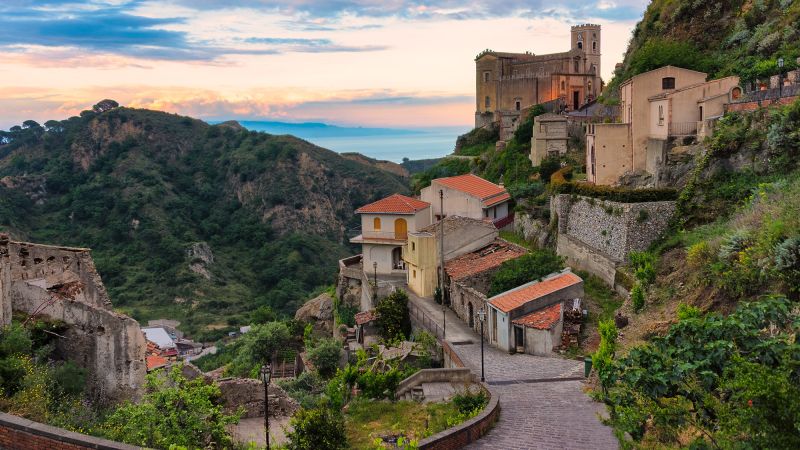
More than five decades later, Savoca—home to fewer than 100 residents—still bears the mark of the film. As one of the key locations for Michael Corleone’s exile, it remains the most frequented site among Sicilian spots tied to the movie. The village has accepted this identity, even as tourism has reshaped its daily rhythms and amplified mafia imagery. Narrow stone paths wind through homes carved into the hills, while arched corridors link ancient structures that have endured for centuries.
Savoca’s ties to *The Godfather* are most evident near the church and main square, where visitors reenact wedding scenes. Bar Vitelli, where Michael Corleone proposes to Apollonia, now draws crowds throughout the day. During peak season, the bar’s owners have transformed the space above into a boutique hotel, reflecting the village’s adaptation to the film’s enduring appeal.
Local Voices Reflect on the Shift
Vincenzo Pasquale, 72, recalls being cast as an extra at 18 to portray one of the Vitelli family’s sons. “Since cruisers arrived 20 years ago, the tourists are overwhelming,” he said. “On some days they cram the streets and I need to honk the horn to drive through. Some get angry.” Despite the influx, Pasquale notes the film’s popularity has grown rather than waned. Savoca’s transformation began with the first cameras rolling, altering its quiet existence into a hub of cinematic fame.
“It can be exhausting, and I do it for free while so many other people, also in this village, have made tons of money thanks to ‘The Godfather,’” Trimarchi said. “We drank so much of it the village cisterns ran dry for a while.”
Before the film, Bar Vitelli was known by a different name and run by Maria D’Arrigo, a local who often hosted cast and crew. According to historian Salvatore Coglitore, D’Arrigo served fresh tumà cheese, salami made from regional pork, and dishes of aubergines and tomatoes in olive oil. She never sought payment, a sentiment echoed by Trimarchi, who remembers Coppola’s fondness for granita—a Sicilian treat made with water from the village’s well. “He loved them, I guess he had never tasted one before or maybe it gave him solace from the heat,” Trimarchi recalled.
Though Savoca’s medieval charm persists, its character has evolved. A handful of bars and souvenir shops now coexist with centuries-old architecture, offering visitors a blend of history and modernity. In the off-season, the village returns to its tranquil roots, with narrow streets and passageways still echoing the footsteps of those who once walked them during the film’s brief 1971 shoot.
