
Attorneys for Tyler Robinson, the man charged with Charlie Kirk’s killing, make case to boot cameras from courtroom
Robinson’s Legal Team Pushes to Remove Cameras from Courtroom
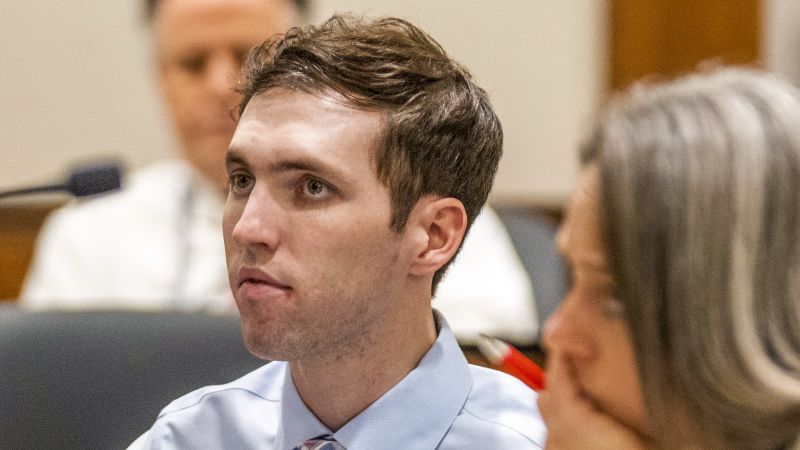
Tyler Robinson, a Utah man accused of murdering Charlie Kirk, faced court proceedings on Friday as his defense attorneys sought to eliminate cameras from the courtroom. They argued that media exposure could compromise the fairness of the trial, fearing the jury pool might be influenced by pretrial publicity. The case has drawn significant attention due to its high-profile nature, with the defense claiming news coverage has been overly prejudicial.
Defense Argues for Camera Ban to Protect Fair Trial Rights
Robinson’s attorney, Michael Burt, emphasized that the presence of cameras and audio devices risked the defendant’s ability to receive an impartial verdict. “The defendant’s fair trial rights will be jeopardized,” Burt stated during the hearing, highlighting concerns about public perception shaping the jury’s decision. The defense presented a montage of video clips and screenshots to illustrate how media focus on Robinson’s demeanor, rather than the legal proceedings, could distort the trial’s integrity.
“Obviously none of this is informative. It’s all speculation and sensationalism,” said Bryan Edelman, a trial consultant, while testifying about the clips. Edelman criticized the focus on Robinson’s expressions and body language, calling it “completely speculating” in past court sessions.
Prosecutors Advocate for Continued Media Presence
In contrast, prosecutors maintained that cameras were essential to counteract misinformation in a case involving the public assassination of prominent conservative activist Charlie Kirk. “Mischief lurks in the dark or in secret,” asserted Chad Grunander, a prosecutor, during his closing remarks. “Conspiracy theories abound, and the antidote is the actual, real proceedings.” A coalition of news outlets, including CNN, and Kirk’s widow, Erika Kirk, supported keeping the courtroom open to media scrutiny.
Case Background and Manhunt Details
Kirk was fatally shot during a Turning Point USA event at Utah Valley University in September 2025. Robinson, who turned himself in after a 30-hour manhunt, was accompanied by his father and a family friend. His parents later walked him to the local sheriff’s office, marking the end of the search. The case now centers on whether the bullet fragment found in Kirk’s autopsy can be linked to the rifle near the crime scene.
Prosecutors relied on a single witness, Cole Christensen of the Utah County Sheriff’s Office, to present their case. Christensen’s report acknowledged media coverage skewed in multiple directions, noting that some reports favored Robinson while others targeted the prosecutors and Kirk’s family. The defense, however, used this to argue that the media’s role was inherently biased.
Decorum Violations and Upcoming Rulings
The defense’s camera ban effort also stemmed from earlier breaches of a decorum order. In December, a pool videographer positioned beside the defense table violated the rule by capturing images of Robinson in shackles, audio of his conversations with lawyers, and documents on the defense table. Utah Judge Tony Graf is set to rule on both the camera ban and the request to delay the preliminary hearing on May 8. Robinson’s attorneys also asked for a postponement of the upcoming hearing, which would prevent him from being arraigned until after the process concludes.
Psychological Impact of Pretrial Publicity
The defense called on cognitive psychologist Christine Ruva to discuss how pretrial coverage affects jurors. Ruva testified about the “primacy effect,” explaining that initial information often dominates a juror’s thinking. She noted that the material reviewed was “overwhelming anti-defendant” in tone, potentially skewing how jurors interpret trial evidence and deliberate.
Prosecutors, meanwhile, admitted a written report by Christensen into the court record and concluded their case, leaving time for the defense to respond. The trial now hinges on whether the bullet fragment can be definitively connected to the rifle found at the scene, a key point for the case’s outcome.
