
How 24 hours of whiplash over the Strait of Hormuz unfolded
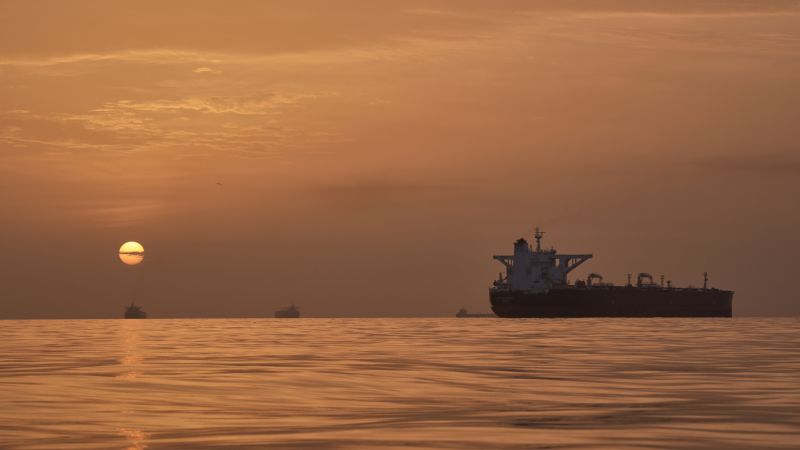
24 Hours of Turmoil at the Strait of Hormuz
Just 24 hours ago, the prospect of increased maritime traffic through the Strait of Hormuz seemed promising as the US-Iran ceasefire neared its end. However, the situation has since shifted dramatically. On Friday, US President Donald Trump expressed optimism about Tehran’s declaration that the strait was “fully open and ready for full passage,” adding a note of gratitude. Iranian Foreign Minister Abbas Araghchi had hinted on X that Iranian ports would soon allow unrestricted movement, a statement that briefly caused the price of crude oil to fall by 10 percent.
“Fully open and ready for full passage. Thank you!”
Yet the optimism was short-lived. Semi-official Iranian outlet Tasnim accused Araghchi of introducing “various ambiguities about the conditions for passage, its details, and its mechanisms.” Hours later, Trump announced that the US blockade of Iranian ports would persist “in full force” until the “transaction” with Iran was finalized. By Sunday, the Islamic Revolutionary Guard Corps (IRGC) had reinstated the blockade, framing it as a response to the ongoing US restrictions. “Approaching the Strait of Hormuz will be considered cooperation with the enemy, and any offending vessel will be targeted,” the IRGC stated in a formal declaration.
The rapid back-and-forth has left little room for optimism. While the US and Iran had briefly aligned on the strait’s status, their broader disagreements remain unresolved. On Saturday, Iranian military officials reiterated that commercial shipping would face strict limitations while the US blockade continued. To underscore this, two vessels were attacked approximately 20 miles off Oman’s coast, with Iranian gunboats reportedly responsible for the first strike, as confirmed by the tanker’s captain.
Trump claimed talks with Iran are progressing smoothly, but stressed the US would not yield to pressure. Meanwhile, Iran’s national security council was reportedly reviewing “new proposals” from Washington, though no official response had been given. The ceasefire, set to expire on April 21, has become a flashpoint for unresolved issues, including Iran’s enriched uranium program and the fate of its nuclear facilities.
Key Points of Dispute
A rare statement from Supreme Leader Mojtaba Khamenei hinted at Iran’s resolve, declaring that the nation’s “valiant Navy stands ready to make the enemies taste the bitterness of new defeats.” Though Khamenei has been absent from public view for six weeks since assuming leadership, his words carry significant weight. A senior Iranian military officer, General Mohammed Naqdi, added that if hostilities resumed, Iran would deploy missiles produced in May 2026. “We can stop oil production, but we did not want to create disturbances for the world, so we acted patiently,” he said.
Despite Iranian sources indicating expectations for a second round of talks in the coming week, the US has not publicly confirmed its intentions as the ceasefire approaches its conclusion. Secret negotiations, however, are reportedly underway in Washington, where top officials, including Defense Secretary Pete Hegseth, CIA Director John Ratcliffe, and the Joint Chiefs chairman, arrived at the White House on Saturday afternoon.
With the deadline looming, the question remains: will the ceasefire be extended, or will the US resume military action? Trump’s uncertainty has cast a shadow over the fragile agreement, as both sides brace for potential escalation.
