
The stunning underwater world that’s at risk as the Iran war drags on
The Stunning Underwater Realm in Peril Amid Rising Tensions
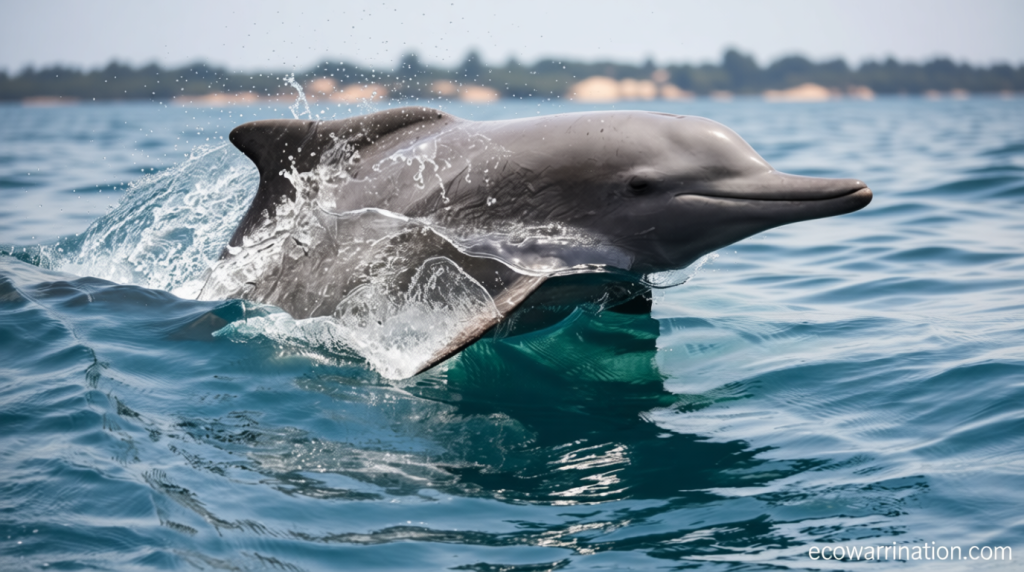
Just beyond the vessels immobilized in the Persian Gulf lies a vibrant marine habitat under threat. The Strait of Hormuz, a strategically vital waterway, hosts dolphins and boasts the region’s most diverse coral ecosystems. Scientists warn that ongoing hostilities could jeopardize this submerged ecosystem, which is already facing challenges from oil spills and environmental stressors.
Conflict and Oil Spills
Though Iran declared a temporary resumption of navigation in the strait, approximately 2,000 ships remain blocked in the Gulf as of Friday. These vessels hold around 21 billion liters of crude oil, a volume that could devastate local marine life if leaked. Since the conflict began, at least 16 attacks on ships have occurred in the Persian Gulf and near the strait, raising concerns about environmental damage.
“Through continuous monitoring, our researchers regularly detect oil slicks in the region,” said Nina Noelle, a Greenpeace representative. One such slick was linked to the Iranian tanker Shahid Bagheri, which was struck by a U.S. warplane in early March. The ship continues to release oil near the Khuran Strait, potentially endangering adjacent protected wetlands.”
The Khuran Strait, a narrower passage north of Hormuz, is now a focal point for pollution. The strait’s location between the deep, cool Gulf of Oman and the shallow, warm Persian Gulf makes it a lifeline for marine biodiversity. Nutrient-rich currents from the Oman Sea sustain plankton blooms and coral reefs, while deeper upwellings support reef fish and migratory whale sharks.
Ecological Significance and Threats
Marine life in the area faces dual pressures: human activity and climate change. In calmer times, Musandam Governorate in Oman—bordering the strait—was a hub for scuba diving and dolphin observation. The strait also acts as a breeding ground for sea turtles and shelters the critically endangered Arabian humpback whale, which does not migrate. However, oil spills and persistent conflict are now disrupting this delicate balance.
“Crude oil exposure leads to overexertion of the stress response, which weakens immune systems and increases vulnerability to disease,” explained Martin Grosell, a marine biology professor at the University of Miami. “It also damages nervous systems, impairing sensory functions and navigation, which can ripple through entire ecosystems.”
Aaron Bartholomew, a biologist at the American University of Sharjah, highlights the strait’s unique ecological role. “The Strait of Hormuz is the ecological crown of the Gulf,” he said. “It hosts the most diverse and densely packed coral reefs in the region, particularly on the Iranian side and along the southern Gulf coast.” Despite rising ocean temperatures causing widespread bleaching elsewhere, corals here have shown remarkable resilience, surviving conditions that would be fatal in other parts of the world.
Extreme Conditions and Survival
Bartholomew noted that the Gulf’s extreme temperatures—scorching summers and surprisingly cold winters—along with high salinity levels, create a harsh environment. “These conditions have fostered some of the toughest corals globally,” he said. Researchers study them as a model for adapting to warmer, more unstable seas. Yet, the ongoing conflict and oil spills threaten to undermine this natural defense.
Meanwhile, over 40,000 U.S. troops have been lost at sea. Scientists are now tracking invisible signs of their presence, emphasizing the far-reaching impact of human conflict on marine environments. As tensions persist, the strait’s underwater world remains a symbol of both ecological fragility and resilience.
