

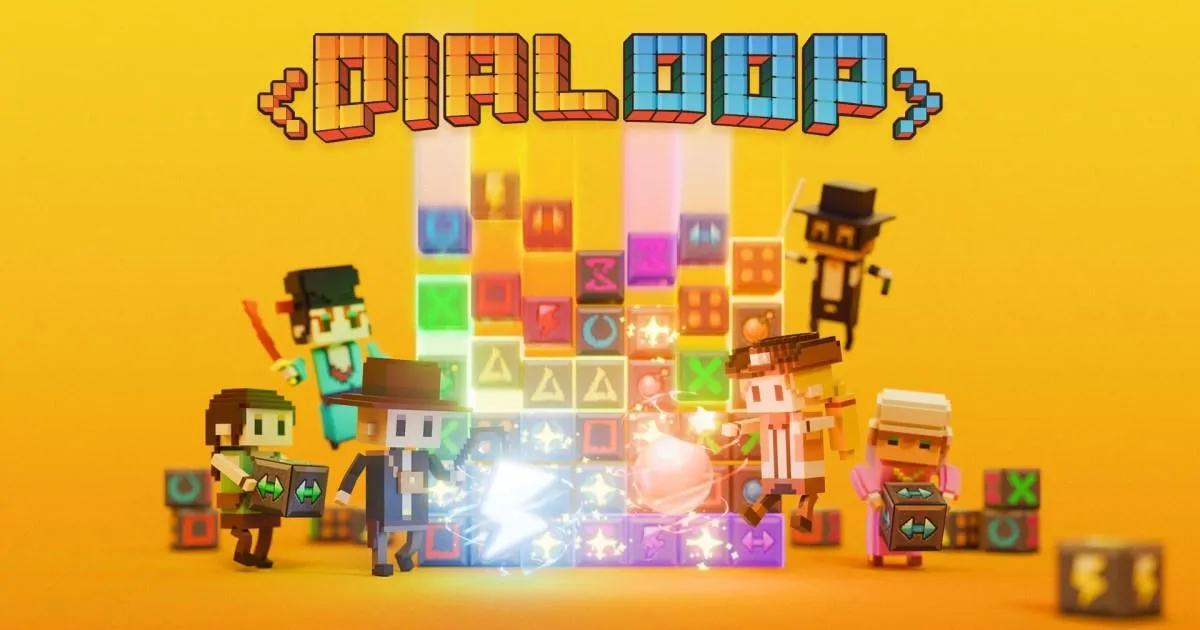
Dialoop Review – Match-Three Puzzling Goes Rogue
Dialoop review – While the match-three puzzle genre may seem familiar, Dialoop introduces an unconventional approach that redefines the experience. This Nintendo Switch indie title, developed with a modest budget, offers a fresh twist on the traditional formula, blending roguelike elements with the core mechanics of tile-matching. The game’s unique charm lies in its emphasis on experimentation and creative problem-solving, making it a standout in a landscape often dominated by repetitive gameplay loops.
A Legacy of Experimental Design
The origins of Dialoop’s concept trace back to the mid-1990s, when Sony launched Net Yaroze, a low-cost development kit aimed at indie creators. This initiative, predating modern tools like Unity and Godot, was revolutionary for its time, enabling smaller teams to access the PlayStation platform and unleash a wave of inventive titles. The spirit of that era—where creativity thrived without the constraints of mainstream budgets—has seen a decline in recent years, with console stores now brimming with predictable, formulaic games. However, Dialoop resurrects that experimental energy, proving that innovation can still flourish even in today’s market.
Unlike the era of Net Yaroze, where developers could craft anything without worrying about profit margins, the current generation of indie games often grapples with commercial pressures. Despite this, titles that retain the anarchic spirit of early PlayStation experimentation continue to emerge. Dialoop is one such example, offering a single-screen experience that feels both nostalgic and daringly modern.
The Mechanics of Freedom
At its core, Dialoop revolves around match-three mechanics, but it diverges from the norm in several ways. Instead of being confined to a fixed grid, players can drag and reposition any colored square, shifting rows and columns with complete freedom. There’s no time limit, allowing for a relaxed, methodical approach to each puzzle. This flexibility is complemented by the ability to abandon a move at any moment without penalty, encouraging players to explore unconventional strategies and combinations.
The game’s design philosophy prioritizes player agency. Unlike traditional match-three games where a single move is often decisive, Dialoop rewards persistence and creative thinking. With each turn, the challenge escalates, requiring more complex combos to achieve progressively higher scores. This dynamic ensures that no two playthroughs are identical, as the player’s choices and the grid’s configuration create a unique puzzle each time.
Relics and Heroic Progression
To aid in this process, Dialoop incorporates a deck-building mechanic through its “relics.” These items, purchased in a shop that appears between rounds, offer various bonuses that influence gameplay. Effects range from increasing the frequency of specific tiles to boosting the score of a particular color or enhancing multipliers under certain conditions. Each relic subtly alters the balance of the game, encouraging players to adapt their tactics and embrace new challenges.
As the game progresses, players unlock new heroes—each with a distinct visual style and special ability. These include iconic figures like Robin Hood, Ishikawa Goemon, and Lana, the latter being a female adventurer inspired by Lara Croft but with her own narrative identity. While the heroes’ stories are static, replaying them allows players to uncover deeper layers of the game’s world through incremental discoveries. This approach keeps the experience engaging, even for those who have completed the game multiple times.
Chaos in Combat and Multiplayer
Adding to its quirky appeal, Dialoop introduces blocky bosses that challenge players with special abilities. These bosses force the player to rethink their approach, often requiring efficient use of turns or targeting specific tile types to succeed. The game also supports multiplayer, enabling up to seven players to compete simultaneously. This feature, however, relies on a Nintendo Switch Online subscription and a small pool of active opponents, which can be a hurdle for some.
Despite these minor limitations, the multiplayer component adds a social dimension to the game, transforming solo sessions into collaborative or competitive experiences. The inclusion of these bosses and multiplayer modes suggests that the developers aimed to create a versatile game that can cater to different player preferences, whether they prefer solo exploration or community play.
A Sonic Journey Through Puzzles
One of the most distinctive aspects of Dialoop is its sound design. Each line of three or more tiles matches to a new chord, creating a rhythmic feedback loop that enhances the gameplay. These chords act as aural cues, guiding players without the need for constant visual tracking. The music becomes an integral part of the experience, adding a layer of immersion that complements the game’s tactile nature.
While the sound design is a subtle element, it plays a crucial role in maintaining player engagement. The chords evolve as the game progresses, reflecting the increasing complexity of the puzzles. This sonic progression not only reinforces the game’s progression but also adds a sense of accomplishment with each successful combo. The result is a puzzle game that feels as much like a musical journey as it does a brain-teasing challenge.
Final Thoughts and Recommendations
Dialoop succeeds in blending the simplicity of match-three puzzles with the depth of roguelike mechanics. Its lack of time pressure and emphasis on experimentation make it accessible to casual players while offering enough complexity to satisfy more seasoned gamers. The game’s quirky heroes, evolving relics, and blocky bosses all contribute to a unique identity that sets it apart from its contemporaries.
“Sign up to the GameCentral newsletter for a unique take on the week in gaming, alongside the latest reviews and more. Delivered to your inbox every Saturday morning.” – GameCentral
Though the game’s static storytelling may not appeal to everyone, it serves as a fun backdrop for the puzzle-solving mechanics. The challenge escalates steadily, ensuring that players remain invested as they uncover new strategies and unlock heroes. For those who enjoy the fusion of creativity and challenge, Dialoop is a worthwhile addition to their library. Its ability to retain the spirit of early PlayStation innovation while adapting to modern expectations makes it a refreshing entry in the puzzle genre.
Ultimately, Dialoop is a game that rewards curiosity and adaptability. It may not revolutionize the match-three genre entirely, but it injects a much-needed sense of playfulness into a space often dominated by formulaic design. Whether you’re looking for a relaxing puzzle experience or a more intense roguelike challenge, this title offers a unique blend that is both satisfying and thought-provoking.