

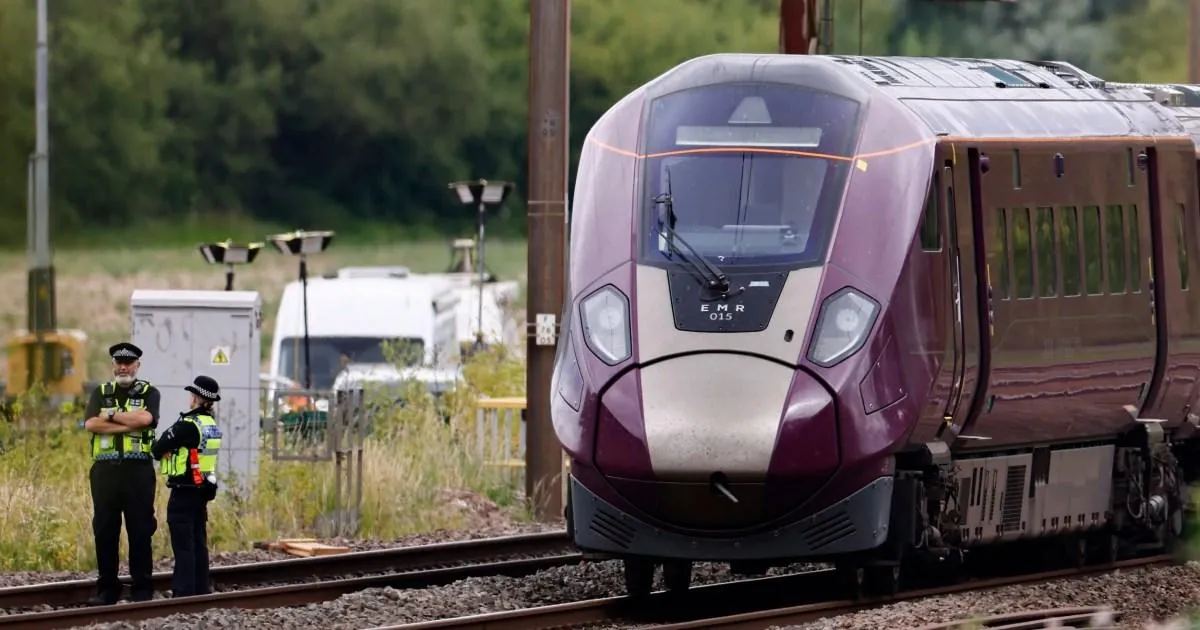
Signal Fault Under Scrutiny After Bedford Train Collision Claims Lives and Injures Over 100
Signal fault may have caused Bedford – Following a fatal train crash near Bedford, authorities are investigating whether a malfunctioning signal contributed to the incident. The collision, which occurred just after 5 p.m. on Friday, left one driver dead and dozens of passengers severely hurt. Emergency services rushed to the scene, treating injured individuals both on-site and at hospitals, as the scale of the disaster unfolded.
Two Trains Collide in Fatal Incident
The crash involved two services operated by East Midlands Railway (EMR), with one train striking the rear of another that had come to a halt on the same track. Video footage from the aftermath revealed the force of the impact, as the front of a Class 360 train collided with the back of a Class 810 unit. The two models differ in age—Class 360s are over two decades old, while Class 810s were introduced by EMR in December of last year.
Emergency responders reported that 100 people were injured, with 11 suffering critical wounds and 22 receiving serious medical attention. The East of England Ambulance Service confirmed all patients with severe injuries were transported to hospitals, while others with minor ailments were treated at the crash site. The union representing train drivers, Aslef, expressed solidarity with the victims and praised the quick response of first-aid crews.
Driver’s Account of the Chaos
A passenger described the terrifying moment of the crash, recalling being thrown forward into the seat in front before witnessing smoke rising from the wreckage. They shared that many on board were in shock, with some unable to speak and others screaming in fear. ‘I saw people with broken legs and those who couldn’t see straight,’ said Dr. Knapp, who provided aid at the scene. Despite his own injuries, including bloodstained trousers and a severe backache, he reported feeling ‘all right’ after the collision.
‘There was a moment of being flung into the chair in front, and then I saw smoke. People were crying, screaming, and people were so scared and confused. I got up, and I saw a lot of people who were unable to speak, had broken legs, and then I managed to get out of the train, and because I’m quite thin, I was able to squeeze out through the gap in the doors,’ recounted the witness.
Investigations suggest the second train may have failed to activate its automatic warning system. Normally, this system triggers an alarm if a train passes a yellow or red signal without braking. If the driver ignores the alert, the train protection system is designed to apply the brakes automatically. However, it remains unclear whether this mechanism failed, leading to the collision that claimed the driver’s life.
Political Response and Rail Infrastructure Concerns
Prime Minister Sir Keir Starmer called the crash ‘hugely concerning’ and commended the emergency services for their prompt action. ‘I am grateful to the emergency services for their swift response to this tragic incident,’ he said. Meanwhile, Network Rail, the organization managing Britain’s rail network, stated it was supporting efforts at the scene and extending its condolences to all involved.
Rail analyst Tony Miles noted that the collision appeared to be a low-speed impact, which may influence the findings of the inquiry. This assessment contrasts with the severity of the injuries, raising questions about the conditions leading to the crash. The fault reported by the driver of the stopped train—a service from Nottingham—was being relayed over the phone when the collision occurred. The report indicated the driver had noticed an issue with the signaling system before the incident.
Technical and Safety Implications
Experts are examining whether the signal malfunction was the primary cause of the crash. The automatic warning system, a critical safety feature, is designed to prevent such collisions by alerting drivers when signals are not properly displayed. However, the system’s failure to activate could have left the train driver unaware of the hazard ahead. The inquiry will also assess whether the train protection system functioned as intended or if it failed to intervene in time.
The incident has sparked discussions about the reliability of newer train models like the Class 810, which were recently deployed by EMR. While these trains are equipped with advanced safety features, the collision highlights the need for thorough checks of signaling systems and emergency protocols. Union leaders have emphasized the importance of ensuring all safety measures are in place, particularly as newer and older train models operate on the same network.
Further Developments and Public Interest
As the investigation continues, additional details are expected to emerge about the sequence of events and technical failures involved. The East of England Ambulance Service remains at the scene, coordinating care for those affected. Meanwhile, the public is urged to stay informed through Metro’s News Updates newsletter or receive breaking news alerts directly on their devices.
The crash has drawn attention to the challenges of managing rail infrastructure and ensuring the safety of passengers. With over 100 injured, the incident underscores the critical role of signaling systems in preventing disasters. As the inquiry progresses, officials will work to determine the exact cause and implement measures to prevent similar occurrences in the future.
Online train tracking platforms confirmed the models involved in the crash, adding to the pool of data for investigators. The information, combined with eyewitness accounts and technical reports, will help piece together the full narrative of the Bedford collision. As the search for answers continues, the focus remains on understanding how a single signal fault could lead to such a devastating outcome.
Network Rail has reiterated its commitment to supporting the investigation, while the train drivers’ union calls for transparency in the findings. The incident serves as a reminder of the importance of maintaining rigorous safety standards in an increasingly busy rail network. As the community near Bedford grapples with the aftermath, the hope is that the inquiry will uncover the root cause and prevent further tragedies.