

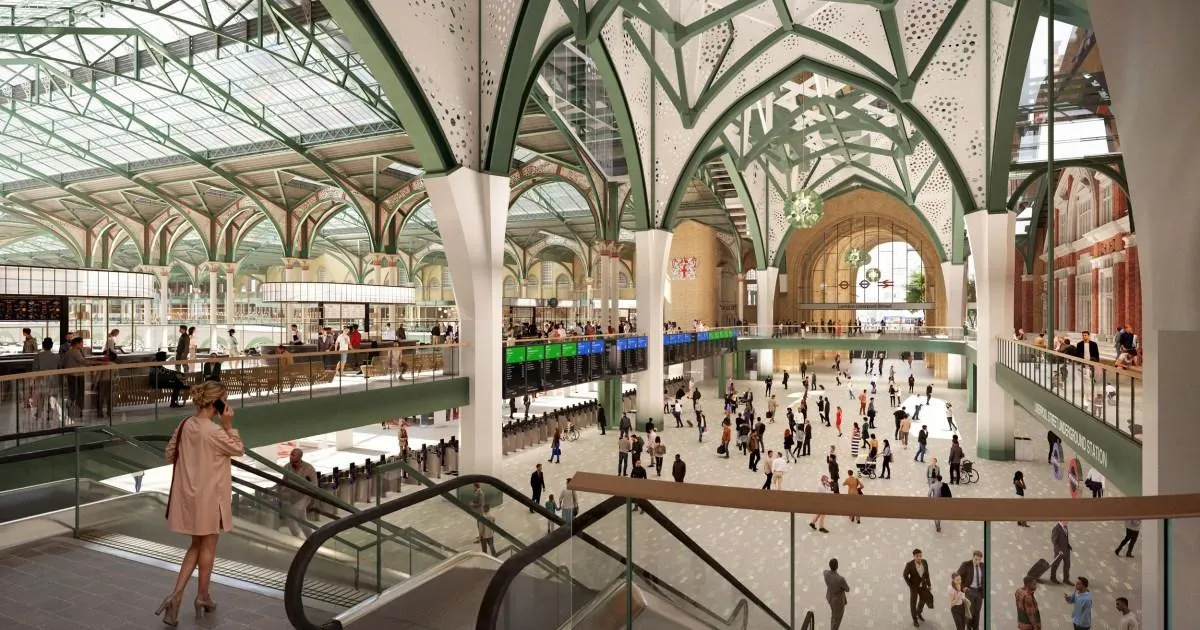
Major £1.2 billion redevelopment aims to transform London’s key transport hub
Inside major 1 200 000 000 plans – London Liverpool Street Station, a central London landmark and one of the busiest railway hubs in the city, is set to undergo a sweeping £1.2 billion redevelopment. The project, which has already received initial approval, now awaits final endorsement from London Mayor Sir Sadiq Khan and Communities Secretary Steve Reed. Designed to address long-standing issues of congestion and inefficiency, the upgrade promises to reshape the way commuters and visitors interact with the station’s infrastructure.
Controversial Design Sparks Debate
The proposed changes have ignited controversy, particularly around the plan to construct a towering 97-meter commercial building above the station’s concourse. Network Rail, the organization overseeing the project, argues that this structure will make the Square Mile—popularly known as the City of London—more inviting for both work and travel. The move is also expected to enhance connectivity between central London and other parts of the country, unlocking new economic potential for the surrounding area.
However, critics like actor Griff Rhys Jones, who leads the Victorian Society and the Liverpool Street Station Campaign (Lissca), have raised concerns. Jones described the day the plans were unveiled as a “sad day for the City of London,” criticizing the design as a “disfiguring billion-pound office block” that compromises the station’s historic character. “This development is not essential to the City’s growth, but it will destroy a conservation area and demolish listed buildings,” he stated in a
blockquote>. “It’s harmful to the historic fabric of the Square Mile and fails to deliver the benefits it promises.”
Despite these objections, the plan is backed by thousands of supporters who see it as a necessary evolution for the station. Lissca, which has rallied significant public backing, will now await decisions from the London Mayor and potentially the Secretary of State for Housing, Communities and Local Government. “This initiative has the support of thousands of people who believe it will modernize the station without sacrificing its heritage,” the group said in a statement.
Addressing Longstanding Challenges
The station has long struggled with overcrowding, creating barriers for individuals with disabilities, families with young children, and those carrying heavy luggage. This redevelopment aims to tackle those issues by redesigning the concourse and introducing new facilities that prioritize accessibility and convenience. Network Rail has emphasized that the changes are meant to “future-proof” the station, ensuring it can handle up to 158 million passengers annually in the coming decades.
As part of the project, a new five-star Hyatt Andaz Hotel will be built adjacent to the station, offering luxury accommodations for travelers. The office tower, which will house shops and commercial spaces, is also designed to better integrate with the Grade II listed architecture of the station. “Our vision is to align modern development with the historical significance of Liverpool Street,” said Ellie Burrows, managing director of Network Rail’s Eastern region. “This approval ensures the station remains a world-class hub for decades to come.”
Public Reaction and Policy Justifications
The plan has drawn a wide range of responses from the public. While over 3,700 people have objected, more than 1,100 have expressed support, believing the investment will bring tangible benefits. The City of London Corporation, which initially approved the proposal, has defended its decision. Chris Hayward, the Policy Chairman of the Corporation, stated: “This redevelopment is a major step forward for the Square Mile. It will support the City’s dynamic business ecosystem with state-of-the-art infrastructure, create new jobs, and strengthen our position as a global destination.”
Hayward also highlighted the need for the project in an increasingly competitive urban landscape. “As cities around the world vie for economic supremacy, we must demonstrate our commitment to innovation. Liverpool Street Station will now serve as a model of progress, balancing modernity with the preservation of our heritage,” he added.
Meanwhile, heritage groups have voiced apprehension. SAVE Britain’s Heritage criticized the plan as a “missed opportunity” to explore less disruptive alternatives. “This decision could have been made with more consideration for the station’s historic value,” the organization said. “We will closely examine the committee’s findings and determine our next steps.”
Next Steps and Timeline Uncertain
With final approvals still pending, the exact timeline for construction remains unclear. Developers initially aimed for completion by 2030, assuming smooth progress through regulatory processes. However, delays in securing official backing could push this deadline further. The project’s success will depend on its ability to balance modernization with the preservation of Liverpool Street’s architectural legacy.
Network Rail has reiterated its commitment to maintaining the station’s unique heritage while improving its functionality. “We are focused on creating a transport hub that is both efficient and respectful of its historical roots,” said Burrows. The company has also emphasized that the changes are essential to meeting growing demand, as passenger numbers are projected to increase significantly in the coming years.
Broader Implications for London’s Infrastructure
The redevelopment of Liverpool Street Station is seen as a landmark effort to upgrade central London’s transportation network. It comes at a time when the city is seeking to modernize its aging infrastructure to meet the needs of a rapidly expanding population. The project could set a precedent for future upgrades, potentially influencing similar initiatives across the city.
While some argue that the tower block’s benefits are overstated, others believe it will bring long-term advantages. The combination of a new hotel, commercial spaces, and improved transport facilities could attract more visitors and businesses to the area, boosting the local economy. However, critics insist that the design should have been refined to minimize its impact on the station’s historic identity.
As the final approvals approach, the debate over the station’s future is likely to intensify. Whether the project will be seen as a triumph of modernization or a loss of heritage will depend on how its implementation unfolds. For now, the focus remains on ensuring that Liverpool Street Station continues to serve as a vital link for London’s commuters while embracing the challenges of growth and change.
This site is protected by reCAPTCHA and the Google Privacy Policy and Terms of Service apply. Your information will be used in line with our Privacy Policy.