
Bulgaria’s Kremlin-friendly ex-president set for landslide election win
Bulgaria’s Kremlin-friendly ex-president set for landslide election win
Official figures from Bulgaria’s parliamentary election indicate that Pro-Russian former President Rumen Radev is poised for a decisive victory, surpassing pre-election forecasts. This outcome could mark the end of decades of fragmented political alliances and bring an end to the nation’s streak of eight elections in five years. Radev’s Progressive Bulgaria party secured 44.6% of the vote after 60% of ballots were tallied, positioning it to govern independently as a significant minority party.
Radev’s campaign has drawn comparisons to Hungary’s former Prime Minister Viktor Orbán, particularly in his emphasis on strengthening ties with Moscow. He advocated for the uninterrupted flow of Russian energy supplies to Europe and criticized the European Union for its accelerated shift toward renewable sources. Despite his pro-Kremlin stance, Radev has hinted at potential cooperation with pro-European factions, such as the PP-DB coalition, which currently holds 14.2% of the vote.
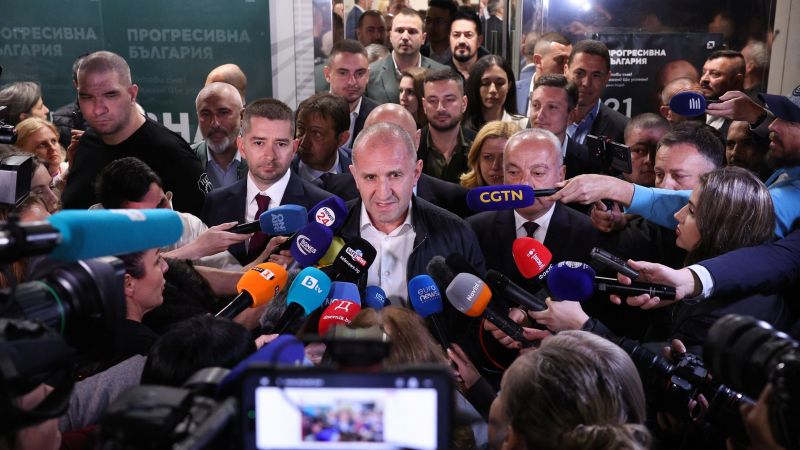
“This is a victory of hope over distrust, a victory of freedom over fear, and finally, if you will, a victory of morality,” Radev stated at a press event, following the preliminary results.
The election result reflects widespread voter discontent with political corruption and the dominance of established parties. Radev, who stepped down from the presidency in January, had gained momentum after mass protests ousted the previous government in December. His appeal rests on a promise of stability in a country where 6.5 million citizens have grown weary of decades of unresolved issues.
Bulgaria, a NATO and EU member state, has seen rapid progress since the collapse of communism in 1989. Life expectancy has risen, unemployment is at its lowest level in the EU, and the economy has adopted euro-zone safeguards. However, challenges persist, including a surge in living costs since the country joined the euro in January 2026. The previous administration fell due to public backlash over a proposed budget that included tax hikes and increased social security fees.
“The country’s main challenge is the economic crisis and the demographic crisis,” noted Tihomir Bezlov, a researcher at the Centre for the Study of Democracy in Sofia. “There do not seem to be many ideas in the winning camp on either of these issues.”
Radev’s leadership now faces the task of addressing these dual crises while balancing his pro-Russian agenda with Bulgaria’s European commitments. His vague policy statements and willingness to engage with pro-European partners suggest a pragmatic approach, though the extent of his influence on foreign policy remains uncertain.
