
US Supreme Court tosses longshot appeal from Virginians to use new congressional map that would benefit Democrats
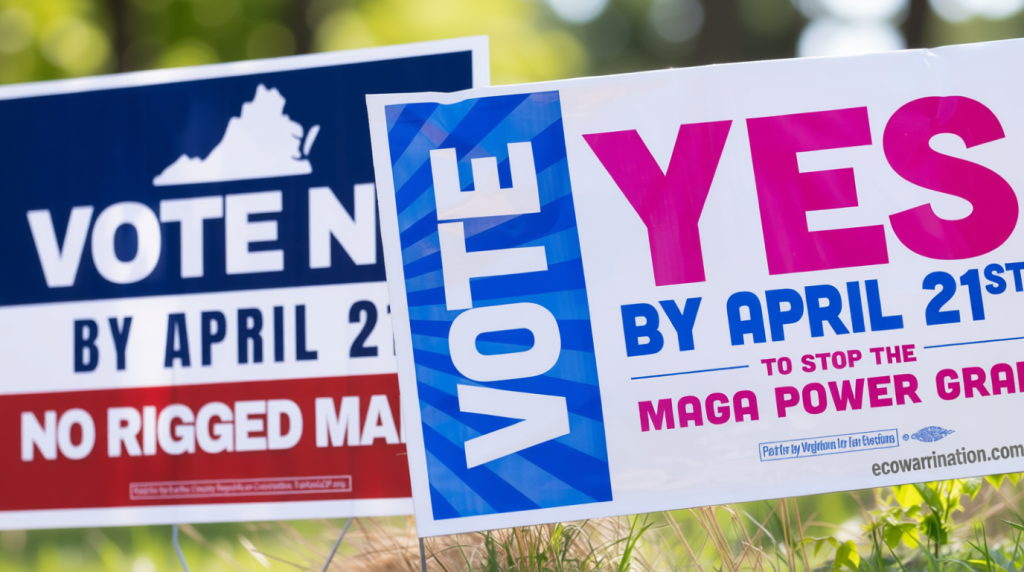
US Supreme Court Dismisses Virginia’s Redistricting Appeal
US Supreme Court tosses longshot appeal – The US Supreme Court on Friday rejected an urgent appeal from Virginia officials seeking to reinstate a congressional map that would have favored Democrats during this year’s midterm elections. This outcome, anticipated by many legal analysts, marks another pivotal moment in the ongoing national battle over redistricting. The decision effectively halts Democratic efforts to leverage the new map for potential gains, including securing up to four additional seats in the House of Representatives.
Context of the Redistricting War
With a 6-3 conservative majority, the Supreme Court has increasingly aligned itself with Republican interests in recent redistricting disputes. The Virginia case, however, diverged from previous rulings by focusing on state-specific legal interpretations rather than federal constitutional questions. This nuance led experts to view the appeal as a long shot, a desperate bid to alter the electoral landscape before the November elections.
The state’s highest court had previously invalidated the Democratic-friendly map, citing a timing issue in the legislative process. Virginia lawmakers had approved the redistricting amendment in late October 2025, before Election Day but during early voting. The state court argued this violated the state constitution by not holding the initial vote on the amendment before the general election. Democratic officials called the ruling “deeply mistaken,” emphasizing its “profound practical importance to the nation.”
“The state courts misinterpreted the definition of ‘election’ in federal law, which clearly refers only to Election Day,” said a Virginia Democratic official in a statement.
Virginia Governor Abigail Spanberger, a Democrat, had already signaled the state’s intent to abandon the appeal. On Wednesday, she announced the state would proceed with the existing maps regardless of the Supreme Court’s intervention. This move underscores the Democratic Party’s strategy to focus on immediate legislative action rather than pursue a high-stakes legal battle.
Legal Arguments and Constitutional Clauses
Virginia Democrats framed their case around a technicality, arguing that the state court’s ruling conflicted with federal definitions of “election.” They claimed that the constitutional amendment, which empowered the legislature to redraw districts, was enacted prematurely. The Democrats also revived a common Republican argument that state courts should defer to legislatures on election-related matters under the Elections Clause of the US Constitution.
The case highlights a key tension in the redistricting process: the balance between state autonomy and federal oversight. While the Supreme Court typically defers to state courts on matters of state law, this decision marks a rare instance where the federal judiciary intervened to question the legitimacy of a state’s legislative action. The lack of a detailed explanation in the one-sentence order has left critics wondering about the justices’ rationale, with no dissents noted in the ruling.
“The court’s decision reflects its broader tendency to support Republican redistricting efforts,” remarked legal analyst Mark Thompson in an interview. “But in Virginia, the legal arguments were more about procedural timing than racial gerrymandering.”
Recent rulings by the Supreme Court have provided political cover for Republican lawmakers to reshape district boundaries between census releases. This strategy has been instrumental in shifting the redistricting race in favor of the GOP. The landmark April decision that weakened the Voting Rights Act of 1965 has emboldened states like Louisiana and Alabama to redraw their maps, often with the support of the federal judiciary.
Virginia’s situation, while similar to those in other states, was distinct in its focus. Unlike cases involving racial considerations, this dispute centered on the sequence of constitutional amendments. The state’s Democratic lawmakers had sought to expedite the process, but the state court found their approach constitutionally flawed. This ruling, combined with the Supreme Court’s dismissal of the appeal, leaves the state’s current map in place for the midterm elections.
Political Implications and Ongoing Debate
The decision has significant implications for Virginia’s electoral dynamics. The original map was designed to tilt the balance in favor of Democrats, potentially reducing GOP representation to a single district. Without it, the state’s electoral outcomes may remain unchanged, at least for now. However, the ruling also raises questions about the court’s role in shaping elections.
Since the Voting Rights Act decision, the Supreme Court has faced internal criticism for its approach to redistricting. Liberal Justice Ketanji Brown Jackson clashed with conservative Justice Samuel Alito over the speed at which Louisiana could redraw its map, accusing the court of prioritizing electoral influence over legal principles. Alito responded by calling the accusation “insulting,” highlighting the divide within the justices over the issue’s political weight.
Virginia’s case adds to the growing list of redistricting battles that have seen the Supreme Court’s interventions. While the court has granted expedited review to several states, the lack of detailed reasoning in this case has sparked debate about the transparency of its decisions. Critics argue that the one-sentence order leaves voters and lawmakers without clear guidance on how the court arrived at its conclusion.
Despite the setback, Virginia Democrats remain optimistic about the broader redistricting strategy. The state’s political landscape has been reshaped by mid-decade map changes, with several Southern states already adjusting their boundaries to maximize Republican chances. However, the Virginia case demonstrates the challenges of using federal courts to overturn state-level decisions, even in politically charged environments.
As the midterms approach, the focus shifts to the practical impact of the ruling. With the existing map in place, Democrats must rely on voter turnout and campaign strategies to offset the potential gains they hoped to secure. Meanwhile, the Supreme Court’s role in redistricting continues to evolve, reflecting the intersection of law, politics, and the power dynamics between state and federal authorities.
