
A measles outbreak crossed into Mexico from Texas. A larger tragedy followed
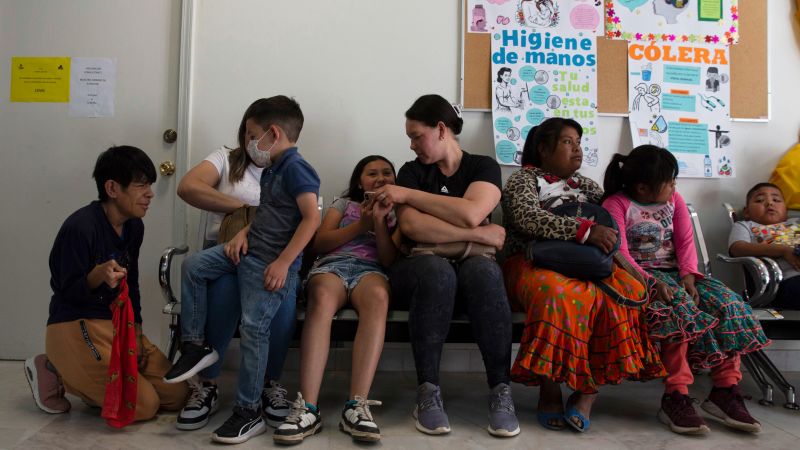
A Measles Outbreak Crossed Into Mexico from Texas, Spreading a Larger Tragedy
A measles outbreak crossed into Mexico – The origins of a devastating measles outbreak trace back to a seemingly ordinary family trip. A 9-year-old boy traveled with his parents to Seminole, Texas, to visit relatives early last year. Upon his return to Mexico, he developed a red rash, which later led to a school closure as dozens of his classmates fell ill. The incident, though initially minor, set off a chain reaction that would amplify the crisis in Mexico, where the disease has claimed at least 40 lives since 2025. The Mexican Health Ministry reports over 17,000 confirmed cases, a figure four times higher than the number recorded in the United States. This stark contrast highlights the fragile state of vaccination efforts in the country.
From Seminole to Chihuahua: A Pathway of Contagion
Parents were unaware that measles had begun spreading during the boy’s visit to Seminole. The virus, which is highly contagious, appeared to have taken root in the town, becoming a focal point of the largest U.S. outbreak in over three decades. Three American lives were lost before the pathogen crossed the border, reaching Chihuahua state—a region dominated by Mennonite communities and agricultural activities. The outbreak’s epicenter, located in a secluded area near the city of Cuauhtemoc, has since expanded to cover nearly the entire country.
“Everything comes from the outbreak in Chihuahua,” said Dr. Miguel Nakamura, director of epidemiological information at Mexico’s Health Ministry. He emphasized that the virus’s journey through the nation was a direct consequence of the initial transmission in Texas.
Genetic analysis conducted by Mexican authorities has revealed the virus’s lineage. Over 100 cases were tested, all confirming the presence of genotype D8 and lineage MVs/Ontario.CAN/47.24—a strain first identified in Canada in 2024 and later detected in Seminole. This connection underscores how easily measles can move between regions, especially when vaccination rates decline. The virus has now traversed all 32 Mexican states, leaving a trail of infections and complications.
The Paradox of Elimination and Complacency
Both the U.S. and Mexico declared measles eliminated over 25 years ago, a milestone celebrated as a triumph of public health. Yet, the recent resurgence in Mexico reveals a stark shift in vaccination coverage. Epidemiologists attribute the crisis to a combination of factors, including a weakened government-run health system and growing public indifference to immunization. “This is the paradox,” said Samuel Ponce de León, an epidemiology professor at the National Autonomous University of Mexico. “Thanks to vaccines, people stopped seeing the consequences of measles, which led to complacency.”
The U.S. outbreak, sparked by the Seminole cases, has drawn attention to vaccine skeptics within the country. In contrast, Mexico’s situation is shaped by different dynamics. President Claudia Sheinbaum, a leftist with a PhD in engineering, has prioritized science-based policies. However, her administration’s efforts have not been enough to reverse the trend of declining vaccine uptake. The outbreak in Chihuahua serves as a case study of how complacency can undermine even well-established health achievements.
A Community in Peril: The Mennonite Experience
The boy’s family resides in a Mennonite community of approximately 30,000 people, known for their religious devotion and pacifist values. While these traits foster a strong sense of community, they have also contributed to vaccine hesitancy among some residents. The 9-year-old’s mother, speaking to CNN under anonymity, described how she noticed her son’s symptoms and contacted the school. The principal, Oscar Peters, initially dismissed concerns, stating that measles cases were rare. This reassurance proved misplaced when a classmate, Artemio Bergen—a boy with a lively personality and a passion for cycling—contracted the disease and fell gravely ill.
Artemio’s family watched helplessly as the virus took hold. His body was overwhelmed by fever and rash, and medical treatment offered little relief. His illness became a turning point for the community, prompting a surge in cases that eventually led to widespread fear. The Mennonite community, which had once been a model of health and organization, now faces a stark reminder of the virus’s power. With many residents unvaccinated, the outbreak has spread rapidly, affecting all age groups from infants to adult farmworkers.
Global Implications and Lessons Learned
Measles, one of the most infectious diseases on the planet, spreads through respiratory droplets and can linger in the air for up to two hours. A single infected individual has the potential to transmit the virus to 18 others, making containment challenging. While most cases are mild, complications can be severe, leading to pneumonia, encephalitis, or even death. The Mexican outbreak has shown how quickly the disease can spiral out of control when vaccination rates drop. The 40 confirmed fatalities in the country since 2025 are a grim testament to this reality.
Epidemiologists highlight that the outbreak in Chihuahua and the U.S. cases share a common thread: a decline in vigilance. In the U.S., the Seminole outbreak raised alarms about vaccine hesitancy, particularly among certain demographics. Meanwhile, in Mexico, the government’s fragmented health infrastructure has created gaps in immunization access. Despite the country’s scientific leadership, the outbreak has exposed vulnerabilities in its public health system. Dr. Nakamura noted that the virus’s spread is not random but a result of systemic underinvestment and public apathy.
The contrast between the two countries is striking. In the U.S., the measles outbreak in Seminole is part of a broader pattern of vaccine-related challenges. In Mexico, the crisis has taken a more severe toll, with infections and deaths surpassing those in the entire United States. The Mennonite community in Chihuahua, once relatively isolated, now stands as a symbol of the virus’s ability to disrupt even the most stable populations. The lessons from this outbreak are clear: measles is a relentless adversary, and its resurgence is a warning of what can happen when vaccination efforts falter.
As the virus continues to spread, the focus shifts to recovery and prevention. Public health officials in Mexico are working to boost vaccine coverage, but time is of the essence. The outbreak serves as a reminder that measles, though preventable, remains a potent threat. With the world still grappling with the effects of the pandemic, the resurgence of measles highlights the importance of maintaining vaccination programs. The stories of the 9-year-old boy and Artemio Bergen are not just individual tragedies but warnings of a broader public health crisis. Their experiences underscore how easily a single case can ignite a nationwide epidemic, emphasizing the need for vigilance and education in the fight against infectious diseases.
