
Nine in 10 families in China own a home. But is the property-owning dream being tested?
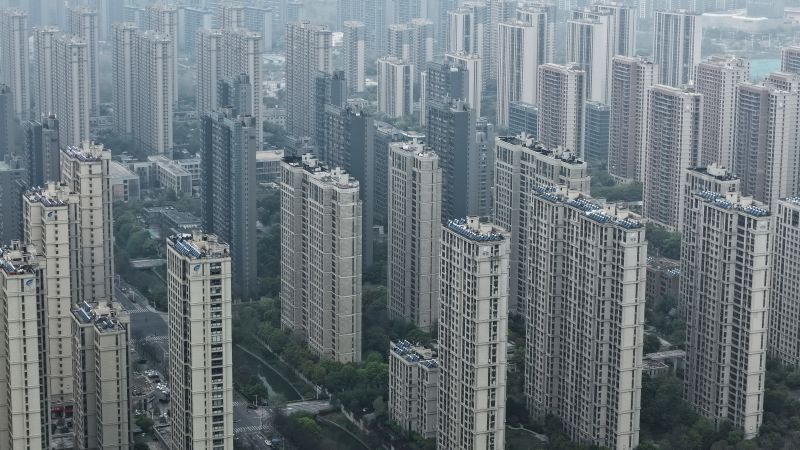
Nine in 10 Chinese Families Own Homes: Is the Dream Fading?
The Cultural Shift Toward Homeownership
Nine in 10 families in China – Nearly nine out of ten Chinese families now own a home, a testament to decades of economic transformation and societal change. This widespread ownership has been a cornerstone of China’s development, intertwining personal aspirations with national growth. The transition from a welfare-based system to a market-driven model in the 1990s solidified private property rights, fostering a culture where homeownership is seen as a marker of success. Yet, recent economic challenges are raising questions about whether this deeply rooted tradition is under pressure.
As the housing market faces a slowdown, the dream of owning a home is beginning to waver for some. Last year, new home sales in China dropped to their lowest level since 2014, reflecting a shift in buyer behavior. While the total sales reached 7.3 trillion yuan ($1.06 trillion) in 2023—a far cry from the 16.2 trillion yuan ($2.3 trillion) of 2021—the data underscores a cooling trend. This change has sparked debates about whether the property-owning ideal, once seen as a symbol of stability, is now being questioned.
The Psychological and Social Impact of Owning a Home
For many Chinese, purchasing a home goes beyond financial investment—it’s a social contract. Owning property is often tied to family legacy, with parents viewing it as a way to secure their children’s future. This belief is reinforced by Confucian values that emphasize familial responsibility and community ties. However, the growing cost of housing and economic uncertainty are challenging these long-held assumptions.
“Owning a home in China represents more than a legal right; it’s a commitment to family and a bridge to social stability,” remarked Eric Fong, chair professor of sociology at the University of Hong Kong. “But when the financial burden becomes overwhelming, that stability can feel like a distant goal.”
The cultural weight of homeownership has also shaped migration patterns. Rural workers moving to cities often prioritize securing a property as a way to integrate into urban life. For them, a home is not just shelter—it’s a symbol of belonging and opportunity. Yet, with housing prices climbing and rental markets expanding, some are reevaluating whether this dream is still attainable for all.
Economic Pressures on Homeownership
China’s housing boom, driven by speculative demand and rapid construction, has left a legacy of debt and uncertainty. In the 1990s, government policies enabled millions to purchase homes at historically low costs, converting renters into owners overnight. This surge created a sense of security, but it also laid the groundwork for current challenges. As the economy slows, buyers are becoming more cautious, with many opting to delay purchases or rent instead.
“The affordability that once made homeownership accessible is now a distant memory,” said Huang Youqin, a professor of geography and planning at the University at Albany. “For younger generations, the dream of buying a home feels increasingly out of reach.”
Meanwhile, developers and local governments are navigating a new reality. During the peak of the housing boom, many construction firms took on massive debts, leading to stalled projects and “ghost districts” where properties remain unsold. The downturn has forced a reexamination of the housing model that once seemed unstoppable.
Despite these hurdles, the tradition of homeownership remains resilient. For many, it is still a priority, offering both emotional and practical benefits. However, the balance between aspiration and affordability is shifting, signaling a potential transformation in how families approach property ownership. This evolution could redefine the cultural and economic landscape for years to come.
