
Bulgaria wins Eurovision, Israel finishes second amid boycotts over its participation
Bulgaria Wins Eurovision, Israel Finishes Second Amid Boycotts Over Its Participation
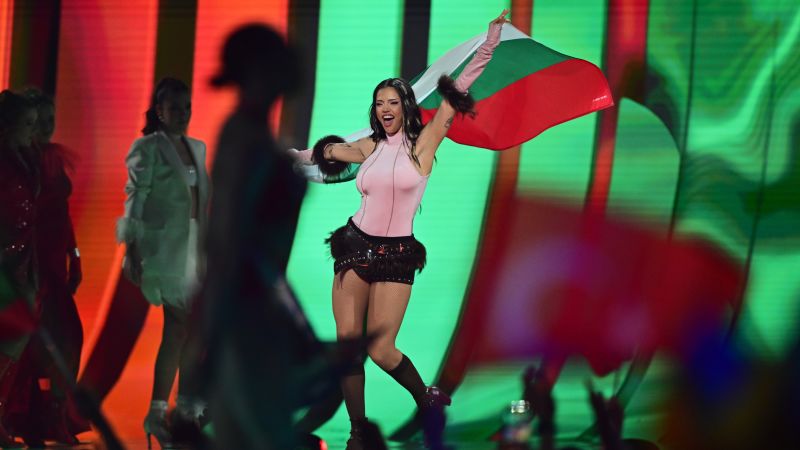
Bulgaria wins Eurovision Israel finishes second – In a night of high stakes and emotional tension, Bulgaria’s Dara emerged victorious at the 2026 Eurovision Song Contest, securing the title in Vienna, Austria, with her infectious track “Bangaranga.” The contest, which had been marked by political controversy due to the participation of Israel, saw Dara’s win as a historic moment for the nation, capping off an edition that was as much about diplomacy as it was about music. Despite the turmoil surrounding the event, Dara’s performance captivated both judges and audiences, ultimately proving to be the decisive factor in the contest’s outcome.
The Politics of Participation
The 2026 Eurovision finale was overshadowed by a wave of international dissent, as five countries—Spain, Ireland, Iceland, Slovenia, and the Netherlands—opted to boycott the competition. Their decision came in protest of Israel’s continued involvement in the contest, a move that sparked debates about the event’s role in political discourse. This marked the most significant crisis in the contest’s 70-year history, with the political divide visible even in the voting booths.
“We will not be at Eurovision, but we will do so with the conviction of being on the right side of history,” said Spain’s Prime Minister Pedro Sánchez, reflecting the sentiment of his nation’s stance. His words underscored the broader conflict, as the contest became a stage for geopolitical tensions rather than just musical artistry.
Outside the Vienna venue, the atmosphere was charged with activism. Some fans, dressed as clowns, carried signs reading “United by Genocide,” a pointed contrast to the contest’s official slogan, “United by Music.” While Israel denied accusations that its actions in Gaza following the Hamas-led October 7 attacks constituted genocide, the symbolic gesture highlighted the deepening divide.
The tension reached a peak during the voting phase, when Israel’s Noam Bettan briefly took the lead. This moment triggered loud boos and jeering from the crowd, a stark contrast to the silence observed during Tuesday’s semifinal. Despite the initial backlash, Bettan’s performance ultimately placed second, with Dara’s victory landing with a margin of 173 points—setting a new record for the largest winning gap in Eurovision history.
A Night of Music and Controversy
Bulgaria’s triumph was not just a celebration of its musical talent but also a testament to its resilience in a politically fraught environment. Dara, a 27-year-old artist, became the first Bulgarian contestant to win the prestigious competition since its inception. The win also marked a rare alignment between the jury and public vote, a first occurrence since 2017.
The contest itself was a colorful spectacle, featuring a diverse array of performances that showcased the continent’s artistic range. Croatia’s entry, “Andromeda,” blended traditional folk elements with contemporary pop, creating a unique sound that resonated with audiences. France’s “Regarde !” was an operatic journey, while Lithuania’s Lion Ceccah delivered a visually striking performance of “Sólo Quiero Más,” a song that addressed the rise of artificial intelligence.
Ceccah’s silver-painted appearance and the track’s thematic focus on technology added a layer of modernity to the contest. The performance concluded with a powerful line: “Humanity, I love you,” which was met with enthusiastic applause. Meanwhile, Finland’s entry, performed by Pete Parkonnen and Linda Lampenius, combined pyrotechnics, angsty lyrics, and a violin solo to secure sixth place.
Australia’s Delta Goodrem, a household name in her home country, also made a strong impression. Her powerful vocals and emotionally charged performance earned her a spot in the top four, though she ultimately finished fourth. Romania’s Alexandra Căpitănescu rounded out the podium, taking third place with a compelling entry that blended elegance and intensity.
The final result was a bittersweet moment for many, as the contest’s traditional vibrancy was tempered by the political undercurrents. While Dara’s win was celebrated as a milestone for Bulgaria, the absence of some countries and the symbolic protests outside the venue reminded everyone that Eurovision is more than just entertainment—it’s a platform for global dialogue.
Despite the challenges, the event managed to deliver its signature blend of spectacle and emotion. From the glitzy costumes to the heartfelt lyrics, the competition offered a mix of styles that showcased the diverse musical landscape of Europe. Yet, the question lingered: would this edition be remembered for its triumphs or for the political rift that split the participating nations?
The success of Dara’s “Bangaranga” was particularly surprising, given that it was not initially seen as a frontrunner. The track’s upbeat rhythm and energetic choreography, however, proved to be a winning formula, bridging the gap between cultural identity and universal appeal. Its victory underscored the unpredictable nature of Eurovision, where the underdog can often steal the show.
As the curtains closed on the 2026 contest, the next edition was already in the planning stages. In a tradition that continues to thrive, the 2027 Eurovision Song Contest will be hosted in Bulgaria, a fitting tribute to the nation’s historic win. The event’s organizers will likely face the challenge of balancing artistic expression with the political weight carried by the participating countries.
For now, the focus remains on Dara’s achievement and the unexpected synergy between the jury and public vote. Her success has not only brought Bulgaria into the spotlight but also reignited conversations about the role of music in uniting people—despite the divisions that emerged this year. As the world watches for the next edition, the legacy of this contest will be one of both celebration and contemplation.
The impact of the boycotts was evident in the reduced number of participating countries, which affected the voting dynamics and the overall energy of the event. While some nations withdrew their support, others reaffirmed their commitment to Eurovision as a symbol of unity. This edition’s blend of music and politics will undoubtedly be discussed for years to come, serving as a reminder of the contest’s evolving role in global culture.
In conclusion, the 2026 Eurovision Song Contest was a defining moment, not just for Bulgaria but for the entire event. The contrast between Dara’s triumphant performance and the political tensions that surrounded it created a narrative of resilience and hope. As the final notes faded, the world was left to ponder whether the contest had become a battleground for ideologies or a beacon of artistic collaboration.
This is a developing story and will be updated as new information emerges. The future of Eurovision remains uncertain, but for now, Bulgaria’s win stands as a testament to the power of music to transcend borders and bring people together.
