
In the US, where people breathe increasingly dirty air, one small city stands out
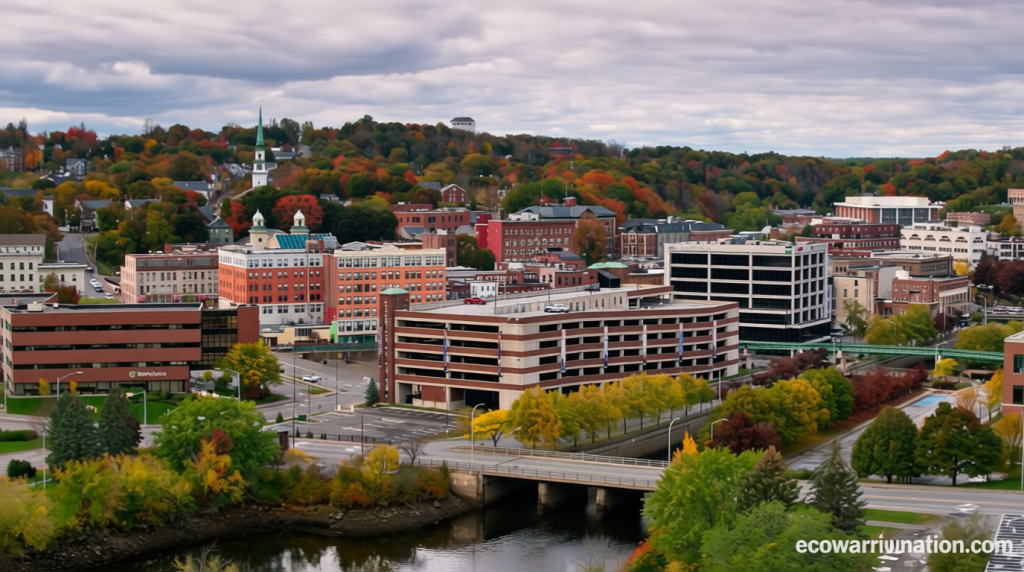
Despite Deteriorating Air Quality, Bangor Maine Holds Top Spot on Cleanest Cities Lists
The American Lung Association labels it a “grim indication of the deterioration of air quality nationwide”: Bangor, Maine, is the only city remaining on all three of its “cleanest cities” lists. According to the association, Bangor boasts zero days of unhealthy ozone or short-term particle pollution and maintains some of the lowest year-round concentrations of hazardous particulate matter in the nation.
Typically, the report includes at least one additional city on all three lists, with several in previous years. This year’s report, published Wednesday, has the Queen City of the East – known for its ties to horror author Stephen King and the legendary birthplace of lumberjack Paul Bunyan – standing alone. The country’s air quality is hazardous for millions of Americans, with nearly half the population – approximately 152 million individuals – inhaling polluted air in counties given failing grades.
People of color are more than twice as likely as White residents to reside in areas with failing air quality on all three metrics. Ozone and particle pollution are among the most prevalent and harmful pollutants tracked by the EPA. Particulate matter, or particle pollution, refers to a blend of solid and liquid particles suspended in the air, including dirt, dust, and smoke. These emissions stem from power plants, vehicles, agricultural activities, unpaved roads, construction sites, and wildfires.
Health Impacts of Air Pollution
Particle pollution poses significant health risks due to its microscopic size, which allows it to bypass the body’s natural defenses. Inhaling these particles can lead to lung inflammation and irritation, with even short-term exposure potentially triggering respiratory issues or heart attacks. According to the World Health Organization, particle pollution is also linked to global premature mortality.
Ozone pollution, or smog, arises when nitrogen oxides and volatile organic compounds from sources such as power plants, vehicle exhaust, gasoline vapors, industrial facilities, and chemical solvents interact with sunlight. Short-term exposure can cause asthma attacks and chest pain, while prolonged exposure may lead to reduced lung function and premature death.
The data for this year’s report spans 2022 to 2024, the most recent three-year period available from the EPA. Ozone pollution impacted more individuals in the US this year compared to the preceding five. While particle pollution levels showed slight improvements, those in high-exposure areas continue to face elevated risks compared to previous years.
Regional Rankings and Trends
Los Angeles remains the worst for ozone pollution, a trend consistent across all but one of the report’s 27 years. Bakersfield, California, holds the title for year-round particle pollution for the seventh consecutive year, though it saw some improvement in short-term pollution this year. Fairbanks, Alaska, now ranks highest in short-term particle pollution.
Bangor received an “A” for both ozone and short-term particle pollution, placing it 10th among 25 cities with the lowest year-round particulate matter levels. Bozeman, Montana, claimed the top position in that category this year.
“The city’s consistent presence on these clean-air lists has become a major draw for residents and visitors alike,” Krieg noted. “Many have expressed interest in relocating here specifically for the clean air and favorable outdoor conditions.”
“Several factors contribute to Bangor’s exceptional air quality,” said Dr. Jean MacRae, an associate professor specializing in air pollution. “These elements distinguish it from much of the rest of the country.”
