
On Capitol Hill, RFK Jr. defends vaccine policies, ongoing shakeups
On Capitol Hill, RFK Jr. defends vaccine policies, ongoing shakeups
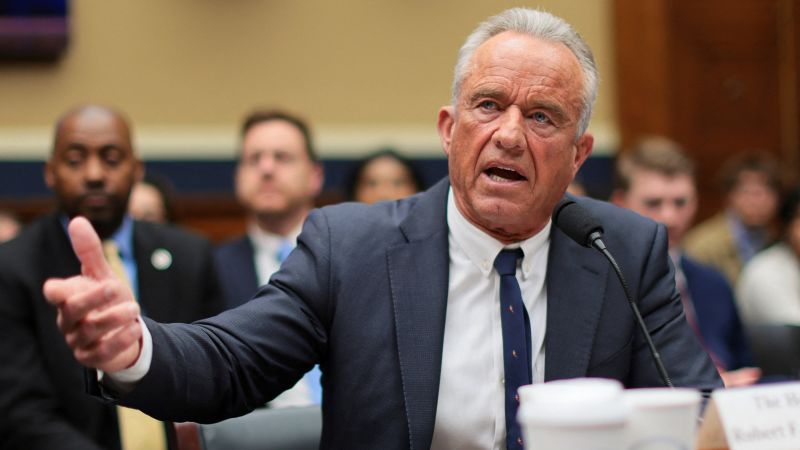
Robert F. Kennedy Jr., the U.S. Health and Human Services Secretary, spent Tuesday on Capitol Hill, fielding inquiries from lawmakers about his stance on vaccines, the reshuffling of agency leadership, and a proposed budget that would reduce funding for medical research and public health initiatives. This marked his fourth appearance before congressional panels in under a week, with sessions spanning both House and Senate subcommittees. Kennedy’s arguments in favor of the administration’s fiscal plan and his policy changes were consistent with previous testimony, though the questions this time included scrutiny over the White House’s influence on the CDC’s direction.
White House’s CDC Nomination Sparks Debate
President Donald Trump announced Dr. Erica Schwartz as the nominee for CDC director on Thursday, nearly eight months after Dr. Susan Monarez was removed from the role for refusing to endorse Kennedy’s vaccine mandates. Schwartz, a seasoned public health professional who served as deputy surgeon general during the first Trump administration, has drawn cautious approval from some health advocates. However, concerns remain about her ability to operate independently once confirmed.
“Mr. Secretary, if Dr. Schwartz is confirmed, will you commit on the record today to implement whatever vaccine guidance she issues without interference?” Rep. Raul Ruiz asked during Tuesday’s hearing.
Kennedy responded: “I’m not going to make that kind of commitment.” He also claimed Monarez’s dismissal was due to her perceived lack of trustworthiness, a point he has repeated in prior sessions. Monarez herself contested this narrative during a Senate hearing in September.
Vaccine Safety and Measles Outbreaks Under Scrutiny
Lawmakers pressed Kennedy on the safety of vaccines and their potential link to the sharp increase in measles cases in 2025. The U.S. recorded over 1,700 cases this year, a record high. Kennedy asserted that declining vaccination rates are not caused by his policies, insisting he supports vaccines but advocates for more safety studies. He cited the scale of pharmaceutical trials and post-approval monitoring as evidence of vaccine reliability.
Despite this, Kennedy acknowledged a proposal to delay hepatitis B vaccination from infancy to age 12. Federal data shows more than 2,000 new hepatitis B cases in 2025, though rates have dropped significantly since the vaccine’s introduction four decades ago. The debate over vaccine timing continues to fuel questions about public health strategies.
Reforms Targeting Advisory Panels
Kennedy also revealed plans to restructure the U.S. Preventive Services Task Force, which issues recommendations for preventive care. Under the Affordable Care Act, insurers must cover services with A or B ratings at no cost to patients. The secretary stated that the task force has been ineffective and that a notice will soon be published in the Federal Register to initiate reforms. “That task force has been lackadaisical. It’s not been doing its job,” he said, hinting at future changes.
As Kennedy prepares for two more Senate sessions on Wednesday, the focus remains on the confirmation process for health care nominees. The Senate Health, Education, Labor, and Pensions Committee is expected to hold the most significant hearing in this series, where the balance of power over vaccine policy and agency autonomy will be closely examined.
