
Senate referee rules against some Trump ballroom funding, Democrats say
Senate referee rules against some Trump ballroom funding, Democrats say
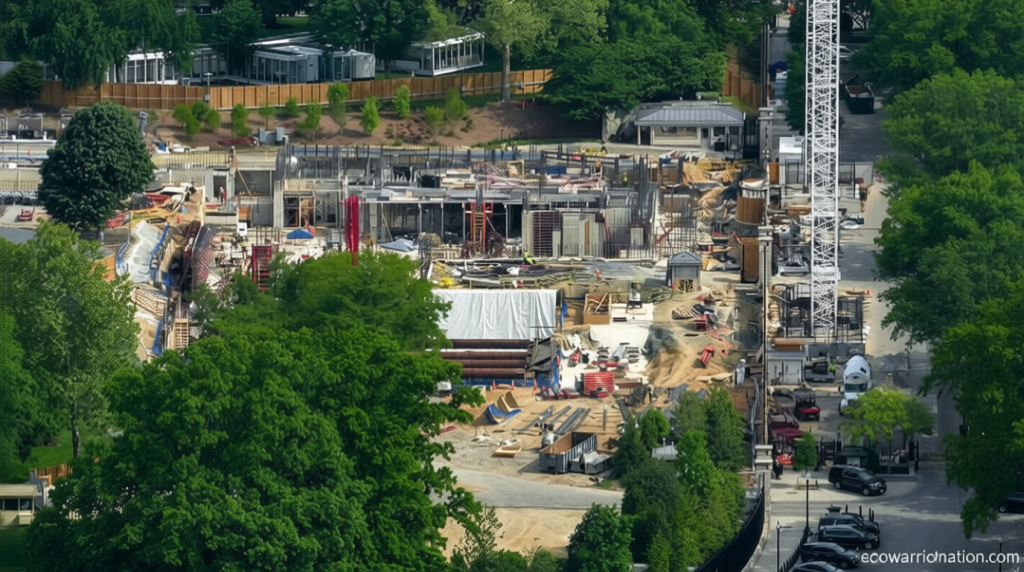
Senate referee rules against some Trump – Capitol Hill has seen a new hurdle emerge for the White House’s efforts to secure federal funds for President Donald Trump’s ballroom security. On Saturday, Senate Democrats announced that the provision aimed at funding the project in the GOP’s most recent budget proposal was declared out of order by the Senate parliamentarian. This development marks a significant setback for Trump’s initiative, which has been a focal point of his administration’s priorities. The ruling by the Senate’s rules referee, Elizabeth MacDonough, adds to the growing complexity of the budget process, forcing Republicans to rethink their strategy for passing the funding without Democratic support.
The GOP leadership, including prominent figures like South Carolina’s Senator Lindsey Graham, had sought to integrate the ballroom funds into a broader immigration package. This approach was designed to bypass the Senate’s 60-vote threshold, a tactic that relies on specific procedural rules. However, the parliamentarian’s decision has cast doubt on this plan, as the provision’s compliance with those rules was deemed insufficient. The $220 million allocated for the East Wing ballroom is part of a larger $1 billion security funding request, which includes resources for the U.S. Secret Service. Despite this, the funds for the ballroom remain a contentious issue, even among Republican allies.
Senate rules are central to this dispute. The parliamentarian, Elizabeth MacDonough, has already identified several other provisions within the budget package that require adjustments to meet Senate procedural standards. Her latest ruling on the ballroom funding further complicates the GOP’s efforts. While the leadership insists the process is still in progress, the decision has already shifted the momentum of the debate. Republicans are now compelled to revise the language of the provision to align with Senate requirements, though there is no guarantee this will resolve the issue.
Multiple GOP sources have noted that the political climate makes the ballroom funding a difficult sell. With the nation grappling with economic uncertainty, many Republicans are wary of allocating a large sum for a project that seems tied to Trump’s personal interests. The White House had argued that the funds would be used exclusively for security, not for renovations or other expenses. However, Democrats have pointed out that the provision’s language does not fully align with this claim. The debate now hinges on whether the funding can be justified as a separate, essential allocation for the Secret Service.
Republican lawmakers have been actively engaged in discussions about the funding’s implications. While most acknowledge the need for security resources, some are questioning the wisdom of spending nearly $1 billion on a single project. GOP Rep. Michael McCaul of Texas highlighted the challenges in persuading his colleagues, stating that there has been “very vigorous debate” over whether to support the initiative. “If you’re in a politically challenging district, that’s not an easy vote to take,” McCaul explained. “I’m not running again, so it doesn’t matter to me. … It’s hard to justify a billion dollars. Just the optics of a billion dollars for a ballroom,” he added, emphasizing the perception of the funding as a partisan gesture.
Other Republicans, such as Georgia’s Rich McCormick, have expressed frustration with the timing of the funding request. McCormick suggested that the administration had not anticipated the political resistance. “I think they miscalculated, obviously,” McCormick remarked. “Typical of a lot of things we do in the government, where you kind of start down a track, and it’s unfortunate, but what are you going to do? You can’t leave the White House unfinished,” he argued, underscoring the urgency of the project.
Despite the challenges, some GOP lawmakers believe the funding could still be a viable option. McCormick noted that the current economic conditions, including the ongoing war in Iran and rising living costs, might not be as detrimental to Republicans as the funding’s price tag appears. “It’s not the thing that people are going to focus on in the next election,” McCormick said, suggesting that the broader context of national security and fiscal concerns could overshadow the ballroom debate. However, this optimism may be tempered by the parliamentarian’s ongoing scrutiny of the provision.
The White House has invested considerable effort in lobbying for the funding. Briefings by the U.S. Secret Service chief, the homeland security secretary, and acting Attorney General Todd Blanche have been part of this campaign. These sessions aimed to reassure lawmakers that the ballroom’s budget is well-justified and that only a fraction of the total $1 billion would be dedicated to the project. According to two sources who attended the meetings, the administration emphasized that the majority of the funds would cover the Secret Service’s general needs, with the ballroom portion being a smaller, targeted allocation.
Yet, the perception of the funding as a partisan move persists. Even with these explanations, the optics of a $1 billion investment in a single ballroom remain a point of contention. The decision by the Senate parliamentarian has also highlighted the delicate balance between procedural compliance and political strategy. While the GOP continues to refine the provision, the fate of the funding now depends on whether they can convince enough senators to back it, even in the face of Democratic opposition.
One Republican lawmaker, speaking on condition of anonymity, described the funding as “somewhere between dead and on life support.” This assessment reflects the uncertainty surrounding the provision’s future. With the Senate’s rules acting as a gatekeeper, the GOP’s ability to pass the funding hinges on their capacity to adapt their language and arguments. The ballroom project’s progress will likely serve as a test case for how effectively the administration can navigate the Senate’s procedural hurdles in the coming months.
