
The extreme positions Trump proposes — and Republicans embrace
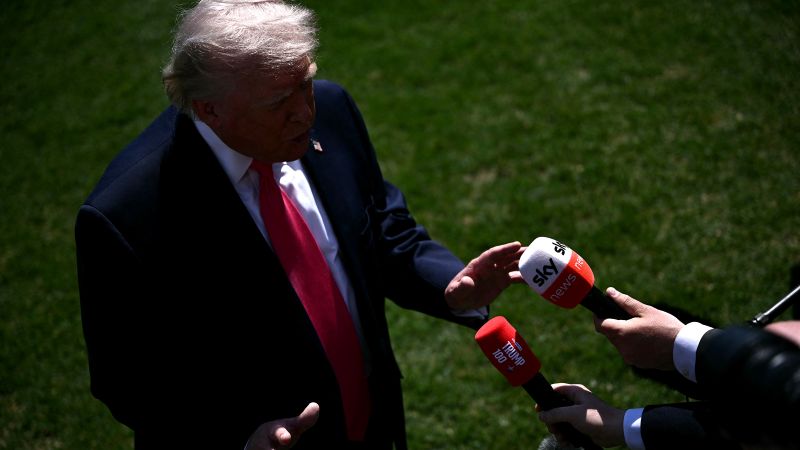
The extreme positions Trump proposes — and Republicans embrace
President Donald Trump has long been known for his bold, sometimes controversial, foreign policy stances. This month, he escalated tensions by warning of potential attacks on Iranian facilities that could amount to war crimes. His remarks included a stark declaration: “A whole civilization will die tonight.” These statements sent ripples through the political landscape, even prompting some of his staunchest allies to express concern. Yet, they were met with approval by a significant portion of the Republican base, as revealed by recent polling data.
Polls Highlight GOP Support for Extreme Measures
A Quinnipiac University poll this week indicated that 66% of Republicans would back targeting Iranian civilian infrastructure, such as power plants, if diplomatic talks faltered. The survey did not clarify that this action could constitute a war crime, which might have influenced the results. In contrast, Democrats overwhelmingly opposed the idea, with 95% disapproving and independents also showing strong dissent at 77%. The same poll found 62% of Republicans viewed Trump’s social media threat to “end Iranian civilization” as acceptable, while the rest were divided.
“A whole civilization will die tonight.”
A CBS News-YouGov poll echoed these findings, revealing that nearly half of Republicans found Trump’s social media post favorably, while about two in ten disliked it. The remaining 31% remained neutral. This pattern of support suggests a recurring trend where Trump’s radical ideas are quickly accepted by his party’s core supporters.
Trump’s Pattern of Provocative Proposals
Over the past decade, Trump has consistently floated extreme policies that tested the limits of his base’s loyalty. For instance, in 2023, he joked about becoming a dictator for a day, and a University of Massachusetts Amherst survey found 74% of Republicans considered the idea a “good thing.” Similarly, when he suggested encouraging Russia to act “whatever the hell they want” against NATO allies, Quinnipiac noted a near-even split among Republicans, with 38% in favor and 39% against.
Trump has also proposed actions that blur the line between legality and aggression. He once floated the U.S. taking control of Gaza, which garnered 49% Republican support. Even when the plan involved “resettling Palestinians elsewhere”—a term synonymous with ethnic cleansing—41% still backed it. More recently, a Reuters-Ipsos poll showed 58% of Republicans endorsed attacking Mexican cartels, despite the move being framed as an act of war without government consent.
Consistently, Trump’s base has shown a willingness to embrace ideas that are far from mainstream. A Marist College poll in January found that at least 70% of Republicans supported military action in Mexico, Cuba, Iran, and Venezuela. Even Greenland, which might seem less relevant, drew 57% approval. When Trump hinted at detaining American citizens in El Salvador—a move deemed potentially illegal—a Marquette University Law School poll revealed 64% of Republicans endorsed it.
Broader Implications of Trump’s Approach
While there is debate about whether Republicans genuinely endorse these ideas or simply align with Trump’s leadership, the trend underscores a broader theme. In recent years, Trump’s supporters have increasingly ratified proposals that border on illegality, including potential war crimes and threats of civilizational annihilation. Through a series of provocative statements, he has expanded the Overton window of acceptable political discourse, pushing his base to rally behind even the most extreme options.
