
Trump to read Bible verse from Oval Office after feud with Pope and deleted AI image
Trump to Read Bible Verse from Oval Office Amid Religious Tensions
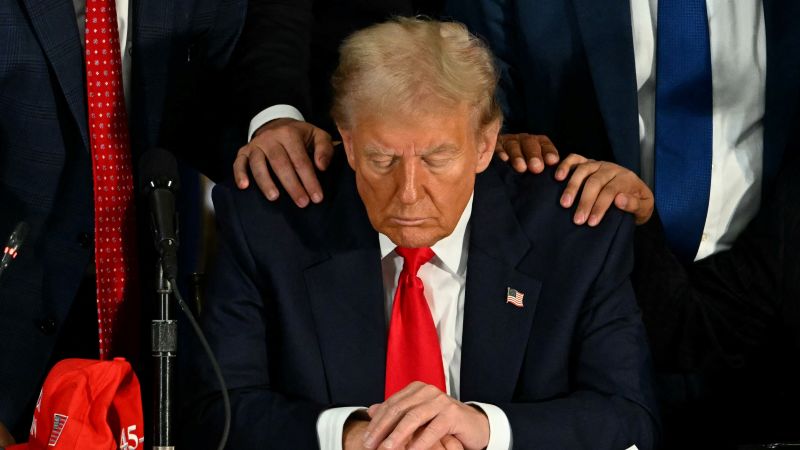
President Donald Trump is set to engage in a public Bible reading this week as the administration advances its integration of Christian values into official government operations. Organizers announced that on April 21, the president will deliver a Scripture passage via video message from the Oval Office during the 6 p.m. EST hour, as part of the “America Reads The Bible” initiative.
“On April 21, President Trump is scheduled to read Scripture via video message from the Oval Office during the 6 p.m. EST hour,” a press release from organizers reads.
The event holds particular significance following Trump’s recent conflict with Pope Leo over the Iran war and his earlier controversy involving an AI-generated image of himself portrayed as Jesus, which he posted and later deleted. The chosen verse, 2 Chronicles 7:11-22, includes the widely cited line: “If my people, which are called by my name, shall humble themselves, and pray, and seek my face, and turn from their wicked ways; then will I hear from heaven, and will forgive their sin, and will heal their land.”
Trump’s involvement in the weeklong event underscores his growing role in blending religious rhetoric with political messaging. The verse has become a symbol for some Evangelical Christians, representing divine approval for national policies. This ties into a broader trend of the administration’s efforts to redefine the relationship between church and state, a shift that has drawn attention from scholars and critics alike.
A Historical Context
According to the Christian Post, the selection of the verse dates back to shortly after Trump’s 2016 election victory, when evangelist Anne Graham Lotz linked it to God answering prayers for his administration. Meanwhile, Bunni Pounds, founder of Christians Engaged, emphasized the choice of Trump as the ideal figure to recite the passage, citing his public presence and influence.
Several administration officials, including Secretary of State Marco Rubio, Defense Secretary Pete Hegseth, and chief of staff Susie Wiles, will accompany Trump during the reading. The week’s activities come as the White House continues to incorporate faith into its public affairs, with recent examples including weekly prayer calls, Christian imagery on government social media, and prayer services led by federal agencies.
“The problem is when it is prescribed for the entire nation as normative or as mandatory as a religious kind of doctrine,” Thompson said.
Hegseth, who has actively promoted religious integration in Pentagon operations, recently invited a pastor known for advocating Christian theocracy to lead a prayer session. The pastor, Douglas Wilson, holds conservative views on issues such as women’s voting rights and homosexuality. At a recent briefing on the Iran war, Hegseth compared reporters to Pharisees, labeling them “the self-appointed elites of their time” who questioned the administration’s approach.
Following the AI image controversy, Trump faced backlash for posting an image of himself as Jesus, which some in his base found offensive. He explained the image was initially intended to depict him as a doctor, aligning with his work with the Red Cross, and clarified that it symbolized his mission to improve people’s lives.
While previous leaders like Jimmy Carter and George W. Bush integrated religious convictions into their policy frameworks, Thompson noted that Trump’s administration represents a more pronounced effort to make faith a national mandate, raising concerns about the balance between religion and state affairs.
