
Viktor Orbán built a ‘propaganda machine.’ Hungary’s next leader must dismantle it
Viktor Orbán built a ‘propaganda machine.’ Hungary’s next leader must dismantle it
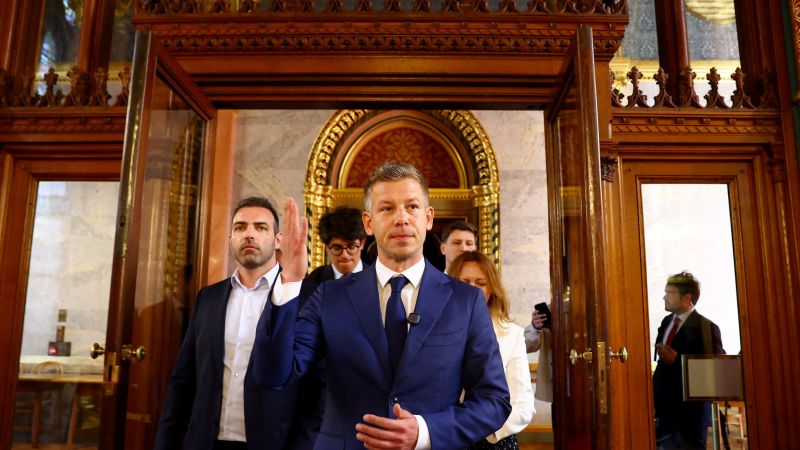
After Péter Magyar’s election as Hungary’s new prime minister, crowds gathered in Budapest to mark the end of Viktor Orbán’s 16-year rule. Yet for Balasz, a 42-year-old financial analyst, the victory felt like a bittersweet moment. He recalled his great-grandmother, now in her 80s and residing in a remote village in the nation’s economically struggling east, who had relied almost exclusively on state media for news over the past decade. To her, Magyar’s win was not a cause for celebration but a source of profound anxiety.
Throughout Orbán’s campaign, the media under his Fidesz party painted Magyar as a dangerous figure, accusing him of threatening Hungary’s peace and pushing the country into conflict with Ukraine. Balasz described the extent of these “lies” as shocking, noting how his great-grandmother believed the state-controlled outlets’ claims that a Magyar victory would force conscription, trigger economic collapse, and lead to a third world war.
“It’s like, you’re old, you’re in the countryside, you’re poor, you have, like, two TV channels, you’re listening to state radio” – and as a result, living in an “alternate reality,” Balasz told CNN.
Magyar, who has begun his tenure as prime minister-elect, faces the challenge of dismantling the media infrastructure Orbán constructed to maintain political dominance. For 18 months, Magyar was excluded from state media, allowing his opposition Tisza party to surge in popularity. Only after Tisza’s decisive win did he gain a platform to confront the propaganda system.
“We have no personal resentment, but one of the elements of our program is that this factory of lies will be put to an end after the formation of the Tisza government,” Magyar said.
Gábor Polyák, a media law professor at Eötvös Loránd University, noted that many in Budapest had heard stories of elderly residents in small villages who, since Magyar’s victory, have lived in fear. He recounted accounts of individuals who “cannot come out from under the bed,” as they were haunted by state media narratives.
“I have heard stories about depressed people who cannot come out from under the bed,” Polyák told CNN.
Despite the propaganda’s impact, Polyák pointed out that the public’s trust in state media has wavered. “The propagandists believed the propaganda more than the target groups,” he said. However, he cautioned that dismantling Orbán’s system will require time. “This is a big chance to have a normal, functioning European country,” he added. “If Magyar doesn’t take this chance, we won’t have another.”
Orbán first took office in 1998, securing NATO membership and guiding Hungary toward the EU. His 2002 defeat by voters signaled a shift, as a close confidant revealed he realized “going back to opposition is not a very good idea anymore.” Re-entering government in 2010, Orbán swiftly consolidated media control, leveraging his two-thirds parliamentary majority to amend the constitution. By 2013, he had implemented laws restricting political advertising, funneling influence to allies. A Fidesz appointee also led the national Media Authority, cementing the regime’s grip on public perception.
Szabolcs Panyi, an investigative reporter, highlighted how the media landscape was reshaped on the financial side. State-owned banks provided “cheap or even free loans” to Orbán’s allies, enabling them to acquire media outlets and silence dissent. The system, once a tool for Orban’s dominance, now faces its first real test under Magyar’s leadership.
