
These North Korean brothers spent 10 years planning their escape. Months after reaching freedom, everything changed
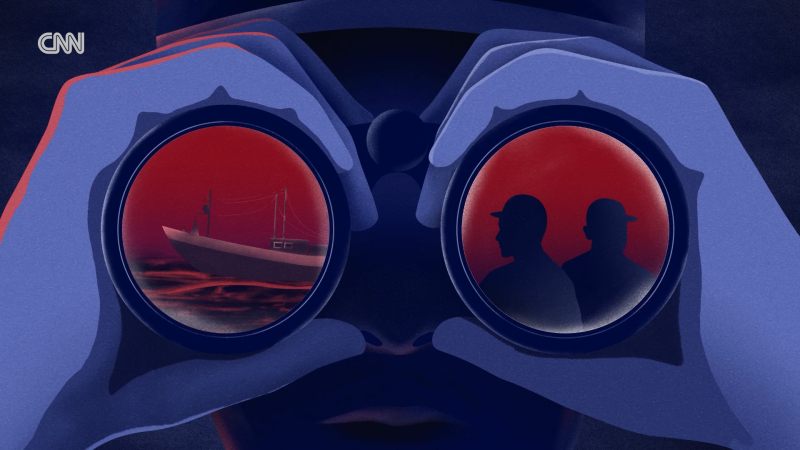
These North Korean brothers spent 10 years planning their escape. Months after reaching freedom, everything changed
Two North Korean brothers meticulously planned their departure from the country over ten years, a bold strategy inspired by their late father’s vision. They carried his ashes with them as they approached a vessel hidden in the dark, where guards loomed nearby, ready to act at a moment’s notice. The operation began on May 6, 2023, during a three-day spring storm that swept across the Yellow Sea, obscuring their path. Kim Il-hyeok and Kim Yi-hyeok gathered their seven family members—including women who navigated a minefield with cautious steps—as they rehearsed their final route. Among the travelers were Kim Yi-hyeok’s two young children, aged 4 and 6, concealed within burlap sacks. Kim Il-hyeok’s wife, five months pregnant, hesitated but eventually agreed to leave with them.
“My wife did not want to defect,” Kim Il-hyeok told CNN. “She was especially worried about doing it while pregnant.”
South Korean officials validated the details of the Kim family’s defection, and the accounts of their struggles align with multiple testimonies from other defectors. Nine individuals embarked on the journey that night, but only eight remain alive today, carrying their stories into the new life in South Korea. The idea of fleeing North Korea first came from the family’s patriarch, who believed freedom might be found by sea. “Our family originally had nothing to do with boats or fishing, and we lived inland,” Kim Il-hyeok explained. “My father said, ‘There is no hope in this society, no way to change it … There is a vast, free world out there. Let’s go to South Korea.’”
He sent his younger son to work along the coast, where the brother eventually secured a boat and earned the trust of party loyalists. “After about four to five years, my brother mastered the trade and acquired his own vessel,” Kim noted. Over time, he cultivated relationships with local security officers through bribes, creating a network that would later facilitate their escape. Pyongyang’s maritime patrols, described as gray sentinels of the regime, patrol the Yellow Sea with relentless precision, targeting defectors crossing the Northern Limit Line (NLL)—the contested maritime boundary between North and South Korea.
The brothers exploited the NLL’s strategic importance, disguising themselves as fishermen to observe patrol patterns. “The simulations went like this: if we sailed toward the NLL, the military might chase us,” Kim said. “We calculated everything, including how quickly they’d detect us.” He added that patrols were slower at night, especially during bad weather or when warnings were issued. “When we were caught, they treated us like major criminals,” he recalled.
Kim described how the brothers used their coastal work to create an alibi. “We’d fish near the border but always return,” he said. “It was a careful act to mask our plans.” Their family was considered relatively affluent in North Korea, where over half the population lives in poverty. Kim’s father traded antiques, gold, and even sold coal by train, while the family owned a large TV officially registered with authorities and a smaller one, smuggled from China. From their home near the South Korean border, they could access 10 channels broadcast from Seoul.
“We had a makeshift copper wire antenna we stored crumpled up and unfolded when needed,” Kim added. “We’d move it around the room until we found a signal.”
Watching those broadcasts, Kim described, felt like glimpsing a different world—one with electricity, abundance, and freedom of movement. “It was like seeing homes with hot water and food that never ran out,” he said. The escape, though successful, marked a turning point for the family, as they left behind the hardships of their homeland for the uncertain promise of a new life.
