
‘Robots don’t bleed’: Ukraine sends machines into the battlefield in place of human soldiers
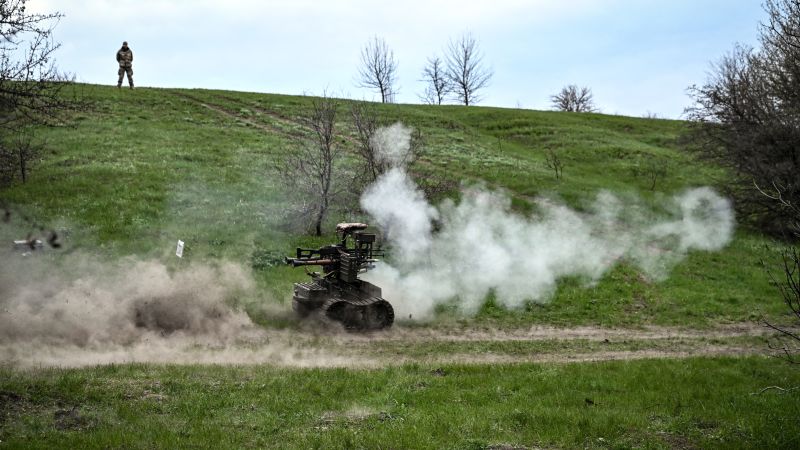
Robots don’t bleed: Ukraine deploys machines on the front lines
As the conflict in Ukraine enters its fifth year, the battlefield is evolving rapidly. Once a domain of human soldiers, it now features remote-controlled machines taking the lead. In one recent operation, two Russian troops were captured by Ukrainian land robots and drones, with the mission executed from a safe distance by a pilot. This marks a significant shift in modern warfare, showcasing how technology is reshaping combat.
Ukrainian unit claims first robot-led capture
Mykola “Makar” Zinkevych, commander of the NC13 unit within Ukraine’s Third Separate Assault Brigade, described the operation as a milestone. “The position was taken without a single shot being fired,” he said, highlighting the use of ground-based robotic strike systems. While verifying this claim remains challenging, it reflects Kyiv’s confidence in its technological advancements.
“We must understand that we will never have more personnel, and we will never have a numerical advantage over the enemy,” Zinkevych added. “So, we need to achieve this advantage through technology.”
Since the conflict began, Ukraine has increasingly relied on robotic systems. Initially used for evacuating wounded and resupplying troops, these machines now play a central role in combat. Land drones, which are harder to detect than larger vehicles, operate in all weather and carry heavier loads. Their durability and extended battery life make them a valuable asset in high-risk zones.
From survival to strategic advantage
Ukraine’s mastery of counter-drone tactics has come at a cost. The skies above the front lines have long been filled with aerial drones, endangering infantry. This has pushed the nation to develop ground-based systems as a countermeasure. Last year, a single land robot with a machine gun reportedly held back a Russian advance for 45 days, requiring only minimal upkeep.
“This is critical in a war where aerial drone observation has made movement near the front line almost deadly,” said Robert Tollast, a land warfare analyst at the Royal United Services Institute. “Even imagining a future where NATO doesn’t fight quite like Ukraine, it’s almost certain these systems will find many uses in other forces.”
Ukrainian President Volodymyr Zelensky announced last week that over 22,000 missions involving drones and robots had been conducted in the past three months. “Lives were saved more than 22,000 times when a robot entered the most dangerous areas instead of a warrior,” he stated, emphasizing the military tech industry’s role in the nation’s survival.
Leadership and innovation drive progress
The push for technological superiority has gained momentum since Mykhailo Fedorov took over as defense minister in January. Previously overseeing Ukraine’s digital transformation, Fedorov now leads initiatives to integrate advanced robotics into frontline operations. His ministry unveiled a war plan outlining strategies to leverage technology and data for peace.
Under his guidance, hundreds of companies have joined government efforts to develop and manufacture drones. The goal is to replace a third of infantry with robotic systems by the end of the year. As Tollast noted, while ground drones may struggle to hold territory alone, they are proving indispensable in saving lives during critical tasks like evacuation and resupply.
