
Spring’s first meteor shower takes place this week. Here’s how to watch
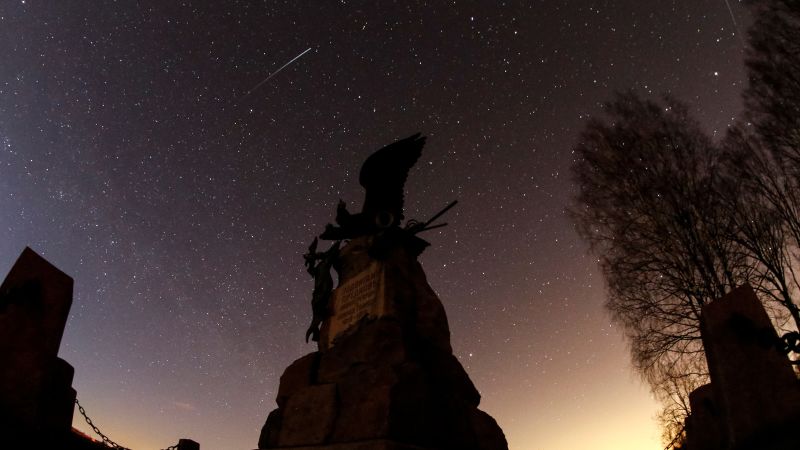
Celestial Spectacle: The Lyrid Meteor Shower Returns This April
Following a three-month absence of meteor activity, the Lyrid meteor shower will make its long-awaited reappearance this week. According to the American Meteor Society, the shower is anticipated to reach its zenith on Wednesday, April 21, around 4 p.m. ET. While the peak occurs during daylight for much of North America, optimal viewing conditions will emerge as the moon sets early, offering a dark sky by evening.
Best Viewing Times
For observers in the Northern Hemisphere, the ideal window to witness the event spans from Tuesday night through Wednesday morning. EarthSky notes that this period provides the best clarity for spotting meteors. The celestial display originates from the constellation Lyra, with its radiant point near Vega, one of the sky’s brightest stars. Even in urban areas, Vega’s visibility is relatively straightforward due to its prominence.
“Toward dawn, the meteors’ source in Lyra will be overhead for the Northern Hemisphere, while in the southern regions, it will appear low in the sky, limiting visibility,” said Robert Lunsford, fireball report coordinator with the American Meteor Society.
Despite its moderate intensity, the Lyrids are not the most prolific meteor shower. They are typically faint and fast, though occasional surges may produce up to 100 meteors per hour. Bill Cooke, lead of NASA’s Meteoroid Environments Office, highlighted that these outbursts occur roughly every 60 years, with the next expected in 2040.
Optimal Viewing Conditions
To maximize the experience, experts recommend finding a secluded spot away from artificial light. Lying flat on your back and gazing upward allows for broader sky coverage. After approximately 45 minutes of adaptation, the faint meteors of the Lyrids may become visible. “Don’t expect immediate results when stepping out of a well-lit house,” Lunsford cautioned, emphasizing the need for patience as eyes dilate.
“Your best bet is to hope for drier, transparent air, which will help reveal the fainter meteors unique to this shower,” Lunsford added. “Don’t look at your phone—it can disrupt your night vision.”
The Lyrids trace their origins to the comet C/1861 G1, known as Thatcher. This comet’s debris stream intersects Earth’s path during the shower, creating the streaks of light. The first documented observation dates back to 687 BC in China, marking over 2,700 years of recorded sightings. The shower will persist until April 30, overlapping with the Eta Aquariids, which peaks on May 5 and 6.
Meanwhile, a separate discovery titled “‘Bathtub ring’ offers new evidence for Mars ocean billions of years ago” provides insights into ancient Martian geology, though it is not directly related to the Lyrids.
Other Meteor Showers in 2026
The American Meteor Society outlines additional meteor events this year, including:
- Eta Aquariids: May 5–6
- Southern Delta Aquariids: July 30–31
- Alpha Capricornids: July 30–31
- Perseids: August 12–13
- Orionids: October 21–22
- Southern Taurids: November 4–5
- Northern Taurids: November 11–12
- Leonids: November 16–17
- Geminids: December 13–14
- Ursids: December 21–22
Even if the Lyrids are missed, numerous other opportunities await in 2026 for stargazers to enjoy cosmic phenomena. Sign up for CNN’s Wonder Theory science newsletter to stay updated on discoveries and events shaping our understanding of the universe.
