

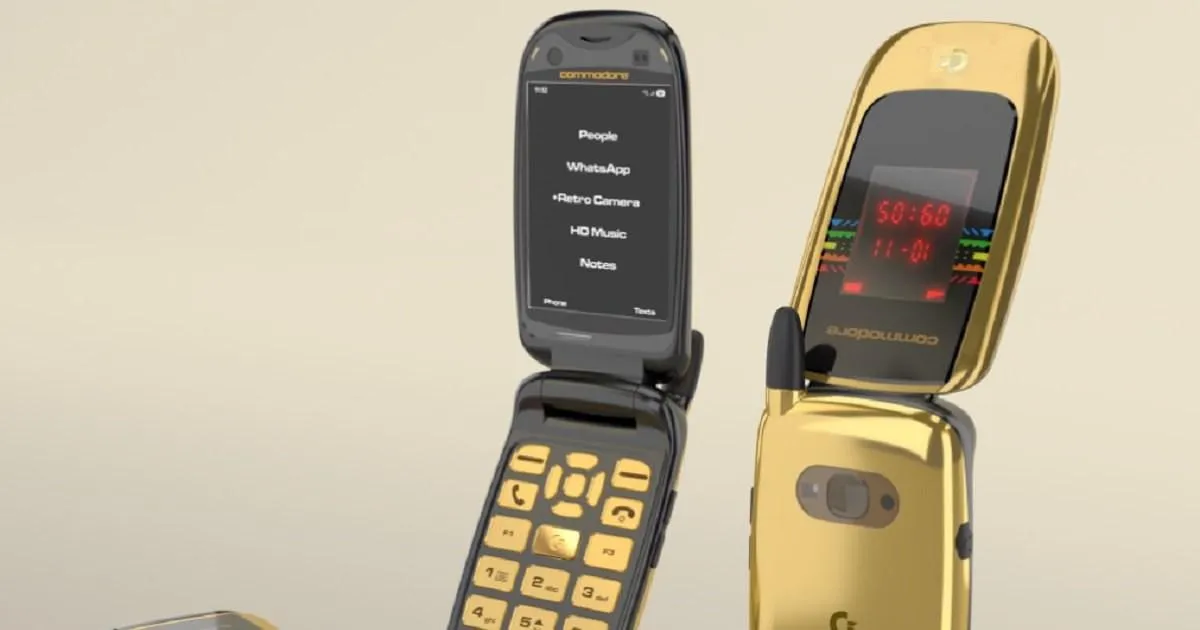
Commodore is bringing back flip phones to help you stop doomscrolling
Commodore is bringing back flip phones – Commodore, the retro computing icon, has unveiled a new mobile device that aims to combat the addictive nature of modern smartphones. Dubbed the Commodore Callback, this flip phone blocks access to all social media apps and web browsers at the system level, effectively limiting users’ ability to endlessly scroll through feeds or browse the internet. Despite this restriction, the phone retains a unique feature: the ability to play a selection of classic retro video games through built-in emulation. This blend of old-school simplicity and modern tech could redefine how people interact with their phones in 2026.
A Return to Simpler Tech
While the announcement may seem like a nostalgic nod to the past, the Commodore Callback is not a mere throwback. It is part of a new venture launched in 2025, which acquired the brand’s iconic name and heritage. The company’s latest product, the Commodore 64 Ultimate, was released earlier that year as a tribute to the original C64 computer, but now it’s stepping into the smartphone market with a twist. This new device is described as an intermediary between a smartphone and a “dumbphone,” offering a hybrid experience that prioritizes user control over constant connectivity.
Although the phone has a flip design reminiscent of the 1990s, it is not without modern features. A key aspect of its functionality is compatibility with 99% of Android apps, including popular ones like WhatsApp and Google Maps. This means users can still access essential services such as messaging and navigation while enjoying the tactile experience of a flip phone. The design also allows for physical buttons, which the company claims introduce “friction” to the user experience, counteracting the seamless, always-on nature of traditional smartphones.
Blocking the Infinite Scroll
The Callback’s primary innovation lies in its ability to restrict access to social media apps. Unlike typical smartphones, where users can manually disable notifications or install apps to limit screen time, this device blocks such apps entirely at the system level. This feature is particularly relevant in today’s digital age, where doomscrolling has become a common habit. The phone’s developers argue that by removing these distractions, users are encouraged to engage more mindfully with their devices.
However, the device isn’t entirely disconnected from the digital world. It includes a small library of retro games, such as the classic Snake, which was famously featured on Nokia’s early mobile phones. This inclusion ensures that the phone still offers entertainment and functionality, even without social media. The combination of gaming and limited connectivity makes it a unique alternative for those seeking a more intentional approach to technology use.
“Smartphones are designed to be mindlessly seamless. Callback is built around a simple research-backed finding: remove features designed to pull you back in and reintroduce physical friction. It’s a speed bump for the mind,” reads the website.
Market Position and Pricing
Despite its retro design, the Callback is positioned as a competitive product in the current market. No official release date has been announced, but the company is already encouraging customers to wishlist the device for a discount when pre-orders launch on June 30. Orders will then be distributed in the winter, suggesting a planned rollout over the holiday season.
Prices for the standard models—available in white, silver, and beige—start at £409.74, but wishlisting reduces the cost to £372.42. For those looking for a more premium option, the Starlight edition is priced at £447.79, with a discounted version at £410.47. The Founder’s edition, a gold-colored variant, costs £522.42, dropping to £477.65 after a wishlist discount. Even without the discounts, these prices are significantly lower than the cost of a brand new iPhone or Android phone, making the Callback an affordable alternative for retro tech enthusiasts.
Commodore’s return to the mobile market comes at an interesting time. The company’s decline in the 1990s was marked by financial struggles and a shift toward more advanced computing, but its resurgence in 2025 signals a renewed interest in simplicity. The Callback’s design and features reflect this philosophy, offering a device that balances functionality with a user-friendly interface. While it may not replace smartphones entirely for most people, it provides a compelling option for those who want to reduce digital dependency without sacrificing essential tools.
A Statement on Digital Habits
“How fitting, that a company whose lights dimmed in the ’90s, returns for its Y2K era, just as so many of us are reaching back for that exact same simpler tech,” says Peri Fractic, Commodore’s president and CEO. The statement underscores the company’s mission to reconnect users with the essence of early digital experiences. By limiting internet access and integrating retro gaming, the Callback aims to create a more focused and purposeful interaction with technology.
The device also aligns with a growing trend of digital detox tools. In an era where social media dominates daily life, the Callback offers a tangible solution to curb overuse. Its success will depend on how well it resonates with users who are tired of the constant connectivity and information overload that modern smartphones bring. Whether it becomes a mainstream product or remains a niche offering, the Callback represents a bold attempt to reinvigorate the concept of the flip phone in a world that has largely moved away from it.
More News
As the Callback gains attention, it is part of a broader movement toward more intentional tech use. The UK government has recently urged a reevaluation of social media bans, citing the short-lived success of Australia’s similar initiative. Meanwhile, Fortnite is exploring AI-generated content, with new skins being sold for up to £15. In a different corner of the gaming world, Sega has unveiled a life-size Sonic The Hedgehog statue infused with “synthetic DNA,” blurring the lines between physical and digital entertainment.
This site is protected by reCAPTCHA and the Google Privacy Policy and Terms of Service apply. Your information will be used in line with our Privacy Policy.
To submit Inbox letters and Reader’s Features more easily, without the need to send an email, just use our Submit Stuff page here.