
Four Palestine Action activists jailed for over 26 years over Elbit raid
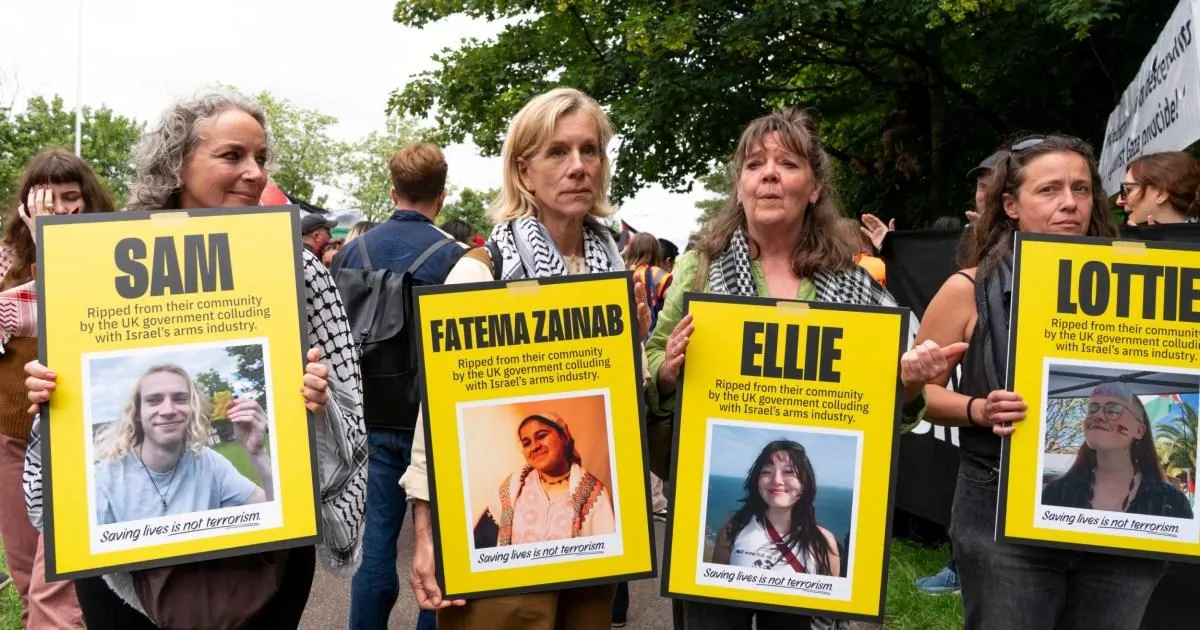
Four Palestine Action activists jailed for over – Four members of the Palestine Action group have been sentenced to prison terms exceeding 26 years for their involvement in a daring raid on Elbit Systems, a defense firm linked to Israeli interests. The incident, which caused approximately £1.266 million in damage, occurred on August 6, 2024, in Bristol, marking a significant escalation in the group’s campaign against Israeli military operations. The activists, identified as Charlotte Head (30), Samuel Corner (23), Leona Kamio (30), and Fatema Rajwani (21), targeted the factory using a repurposed prison van, demonstrating both ingenuity and boldness in their operation.
Details of the raid
During the raid, the group bypassed Elbit’s security barriers before deploying sledgehammers and crowbars to dismantle key equipment, including computers and drones. The attack left one police officer with a fractured spine after being struck on the back with a sledgehammer by Corner. The officer, PC Kate Evans, described the incident in a heartfelt statement, highlighting the personal toll of the assault.
“I experience disturbed sleep, often waking in a panicked state or after distressing dreams,” Evans said, her voice trembling as she recounted the trauma of the event.
The raid, which was conducted with precision and determination, resulted in significant damage to Elbit’s infrastructure. The group’s actions were not only a physical attack but also a symbolic statement, aiming to disrupt operations and send a message about the perceived injustices in Gaza. The activists were arrested during the operation and later brought to Woolwich Crown Court for sentencing.
Legal outcomes and judge’s remarks
The Filton Four, as the group has been nicknamed, received their sentences today at Woolwich Crown Court. Corner received eight years and eight months, while Head and Kamio were each sentenced to six years. Rajwani, the youngest of the four, was given five years and eight months. Mr Justice Johnson emphasized the severity of the crime, labeling it an “act of terrorism” due to its intent to influence government decisions and intimidate the public.
The judge noted that the activists had meticulously planned the operation, with Corner holding the authority to veto specific actions during the raid. This level of organization, according to Johnson, demonstrated a calculated approach that elevated the attack beyond mere vandalism. Additionally, two of the group members livestreamed the raid and shared the footage on social media, which the judge cited as an effort to “glorify criminality and vigilantism.”
Supporters and legal challenges
Throughout the sentencing, supporters of the Filton Four gathered in the public gallery, cheering and clapping as the verdicts were announced. Their presence underscored the widespread public backing for the activists’ cause. However, the courtroom also saw a show of solidarity with the group’s legal status, as 72 protesters were arrested outside for supporting a proscribed organization.
The legal battle surrounding Palestine Action intensified with the sentencing. The group was officially designated a terrorist organization in July 2025, making membership or support a criminal offense. Rajiv Menon KC, representing Head, argued that the label of “terrorism” was excessive for the crime of criminal damage. Menon contended that the judgment would create a “chilling, creeping authoritarianism” and that previous cases had not imposed such labels on similar offenses.
Despite the legal designation, the High Court had previously ruled in February 2026 that the decision to ban Palestine Action was unlawful. This ruling sparked an appeal by the government, with the case set for Monday to determine the future of the group’s status. The ongoing legal dispute highlights the broader debate over the classification of activist groups and the implications for their members.
Impact on the police officer
The attack’s consequences extended beyond the physical damage to Elbit Systems, affecting the life of PC Kate Evans, the officer injured during the raid. Evans, who sustained a spinal fracture while responding to the assault, revealed that the incident forced her to resign from her position and continue receiving medical treatment. Her personal account during the sentencing underscored the human cost of the raid, emphasizing the vulnerability of law enforcement during such confrontations.
“The attack has left me with lasting scars, both visible and invisible. I’ve had to give up my rank, and I still rely on medical care to manage the effects of the injury,” Evans said, her emotions evident as she spoke.
Johnson described the force used against Evans as “extreme and gratuitous,” noting that the activists had shown no hesitation in targeting a police officer while she was performing her duties. This aspect of the raid, according to the judge, was a key factor in its classification as a terrorist act.
Public reaction and context
Supporters of the Filton Four not only cheered during the sentencing but also took to the streets outside the court, blocking the prison vans that transported the defendants. Protesters lay in the road, physically obstructing the vehicles to demonstrate their solidarity. This display of public dissent reflects the deep divisions in society regarding the group’s actions and the legal measures taken against them.
Outside the courtroom, tensions were high as the activists’ supporters waved banners and shouted slogans, calling for justice and highlighting their belief in the cause. The group’s activities have long been tied to the conflict in Gaza, with their actions seen as both a form of protest and a direct challenge to Israeli policies. The judge acknowledged this motivation, stating that the activists had become “disillusioned” with legal avenues to oppose the government’s actions in the region.
Broader implications
The case has sparked renewed discussions about the balance between national security and civil liberties. Critics argue that the classification of Palestine Action as a terrorist organization has led to the criminalization of peaceful dissent, while advocates maintain that the group’s tactics justify such designations. The sentences handed down today serve as a stark reminder of the consequences faced by activists who take direct action against perceived injustices.
As the appeal against the proscription of Palestine Action approaches, the future of the group remains uncertain. The government’s decision to pursue the legal designation has drawn both support and criticism, with some viewing it as a necessary step to combat extremist activities and others seeing it as an overreach. The Filton Four’s case, however, will likely shape the debate for years to come, as it stands as a symbol of the broader conflict between activism and the law.
Meanwhile, the public continues to engage with the issue, with supporters organizing demonstrations and expressing their views on social media. The raid on Elbit Systems, though controversial, has become a rallying point for those who see it as a justified act of resistance. As the four activists begin their sentences, their story remains a focal point in the ongoing discourse about the role of grassroots movements in shaping political and military actions.
Got a story? Get in touch with our news team by emailing webnews@metro.co.uk. Or you can submit your videos and pictures here.
Follow Metro.co.uk on Twitter and Facebook for the latest news updates. You can now also get Metro.co.uk articles sent straight to your device. Sign up for our daily push alerts here.
This site is protected by reCAPTCHA and the Google Privacy Policy and Terms of Service apply. Your information will be used in line with our Privacy Policy.