

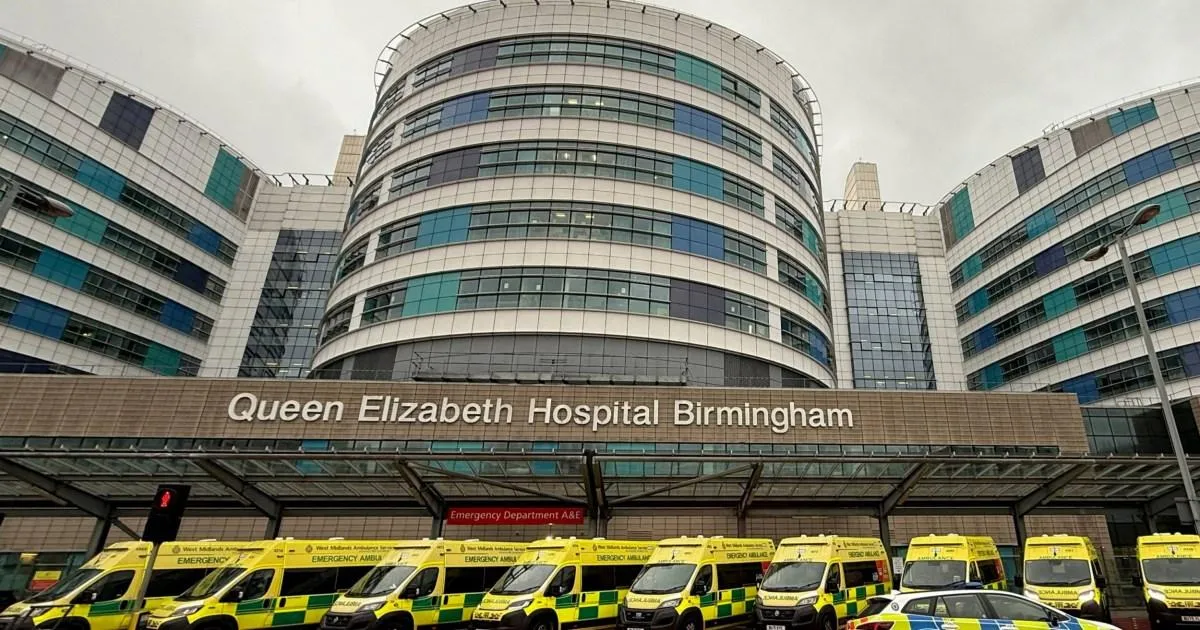
Hospital Lockdown Amid Fears Patient Has Ebola Symptoms
Hospital lockdown amid fears patient has Ebola – In a recent incident, a Scottish hospital was placed under lockdown after a patient exhibited potential signs of the Ebola virus. The emergency action was taken to safeguard both healthcare workers and the public, highlighting the virus’s reputation as a severe and highly transmissible illness. The patient, who had just returned to Glasgow from a country affected by the outbreak, became the center of concern, prompting swift measures to isolate the facility.
Isolation Protocols Activated
The hospital’s Acute Receiving Unit, which serves as a primary point of entry for patients referred by their general practitioner or the healthboard’s 101 service, was quickly sealed off. This step aimed to prevent the spread of the virus within the broader hospital premises. According to a source, the unit was shut down immediately, with staff working to contain the situation.
“Ebola is a deadly and contagious illness, so emergency measures had to be implemented right away to protect staff and the public,” the source explained. “The person arrived at the Acute Receiving Unit, where patients are usually sent to avoid emergency departments. But within hours, the unit was cordoned off, and the patient was moved to a separate area for further evaluation.”
The individual was assessed at the unit before being relocated to another section of the hospital. While the exact tests conducted remain undisclosed, the source suggested the patient was placed under quarantine to await results. This procedure underscores the critical importance of rapid response in healthcare settings when dealing with potential outbreaks.
Public Health Response and Protocols
Public Health Scotland (PHS) emphasized its collaboration with the UK Health Security Agency (UKHSA) to monitor travel routes from Ebola-affected regions. The spokesperson noted that the risk posed by travelers arriving in the UK is generally low, thanks to established protocols. These include thorough assessments of individuals from affected areas and the implementation of contact tracing when necessary.
“The NHS has robust procedures in place for identifying and managing such cases,” the spokesperson said. “PHS and healthboards across Scotland have well-defined protocols to address potential outbreaks, ensuring timely intervention. The Returning Workers Scheme has also been activated, requiring organizations deploying staff to affected regions to register their employees for monitoring.”
Such measures reflect the proactive stance of Scottish health authorities in mitigating the spread of the virus. The focus is not only on containing the outbreak but also on educating healthcare workers about the risks associated with Ebola, especially in areas where the disease is not commonly encountered.
Historical Context of Ebola in the UK
Looking back, the first recorded case of Ebola in the UK occurred in 2014, involving a Scottish nurse who contracted the virus while working in Sierra Leone’s Kerry Town. Pauline Cafferkey, an associate public health nurse based at Blantyre Health Centre in South Lanarkshire, was diagnosed after attending a church service without her protective gear on Christmas morning. Her case sparked widespread awareness and prompted stricter protocols for handling similar situations.
Since then, the UK has developed a more refined approach to managing potential Ebola cases. However, the recent lockdown in Glasgow serves as a reminder of how quickly the virus can resurface, even in regions with prior experience.
Recent Developments in Africa
Just days prior to the Glasgow incident, a French doctor working in the Democratic Republic of the Congo (DRC) tested positive for Ebola. The health ministry confirmed the patient had been on a humanitarian mission and is now in isolation. This development has renewed global attention on the ongoing outbreak in the DRC, where the strain of the virus known as Bundibugyo is causing significant concern.
Experts warn that the Bundibugyo strain, which has no available vaccine or treatment, represents the largest recorded outbreak of its kind. The US Centers for Disease Control and Prevention (CDC) has acknowledged this as a critical moment, with the strain now posing a challenge in regions previously less affected by the disease.
Global Implications and Public Health Efforts
The World Health Organization (WHO) declared a public health emergency last month, underscoring the severity of the DRC outbreak. This step highlights the international effort to combat the virus, which spreads through bodily fluids and can lead to life-threatening haemorrhagic fever. Symptoms typically emerge between two and 21 days post-exposure, starting with flu-like manifestations such as high fever, exhaustion, and headaches.
Despite the alarm, officials stress that the general risk to Europe remains low. However, challenges persist, particularly in contact tracing efforts within the DRC. Recent fieldwork by Oxfam revealed that the country has only 0.2 doctors per 1,000 people, a statistic that complicates the response to the outbreak. Additionally, over 70 health facilities have been destroyed by conflict, further hindering efforts to track and manage cases.
Impact of Conflict on Outbreak Response
The years-long conflict in the DRC has displaced millions, including many in the Ituri region, where the outbreak is concentrated. This displacement has made it difficult to trace all individuals who may have come into contact with the infected doctor. With contact tracing coverage standing at just 43%, healthcare workers are relying on limited data to control the spread.
“The sheer scale of displacement and the lack of medical infrastructure make containment challenging,” a health official noted. “But with coordinated efforts, we can still manage the situation effectively.”
While the Glasgow lockdown was a precautionary measure, it demonstrates how quickly the virus can evoke fear and action. The combination of historical precedents, current global spread, and local challenges underscores the need for continuous vigilance in public health systems. As the situation evolves, the focus remains on swift identification, isolation, and testing to prevent wider transmission.
As the world watches the DRC outbreak closely, the Scottish incident serves as a case study in emergency preparedness. The lessons learned from past cases, such as Pauline Cafferkey’s, have shaped modern protocols, ensuring that healthcare workers are equipped to respond rapidly to any new threats. However, the virus’s ability to spread unnoticed highlights the importance of maintaining robust surveillance systems and public awareness campaigns.
For now, the hospital in Glasgow is operating with heightened caution, while Public Health Scotland continues to monitor the situation. The UKHSA’s Returning Workers Scheme has been activated, emphasizing the need to track individuals traveling to high-risk areas for work. This dual approach of local response and international monitoring aims to create a layered defense against the virus’s resurgence.
With the Bundibugyo strain on the rise and the global health landscape in flux, the stakes for containment remain high. The recent cases in both the UK and Africa highlight the virus’s potential to impact regions far from its traditional epicenters. As long as the disease persists, the focus on prevention, rapid response, and collaboration between health authorities will be essential in curbing its spread.
This site is protected by reCAPTCHA and the Google Privacy Policy and Terms of Service apply. Your information will be used in line with our Privacy Policy.