
Paint Peeling on Trump’s $14.7 Million Washington Reflecting Pool Renovation
Paint is already peeling on Trump – Trump’s $14.7 million renovation of the Washington reflecting pool has already faced scrutiny, with paint beginning to peel just days after the project’s completion. The iconic Lincoln Memorial Reflecting Pool, a central feature of the National Mall, was redesigned to reflect Trump’s vision of modernized landmarks. However, visible cracks and flaking in the newly applied ‘American flag blue’ paint have raised eyebrows, signaling early signs of wear and sparking questions about the project’s durability.
Algae Bloom Overshadows the Renovation
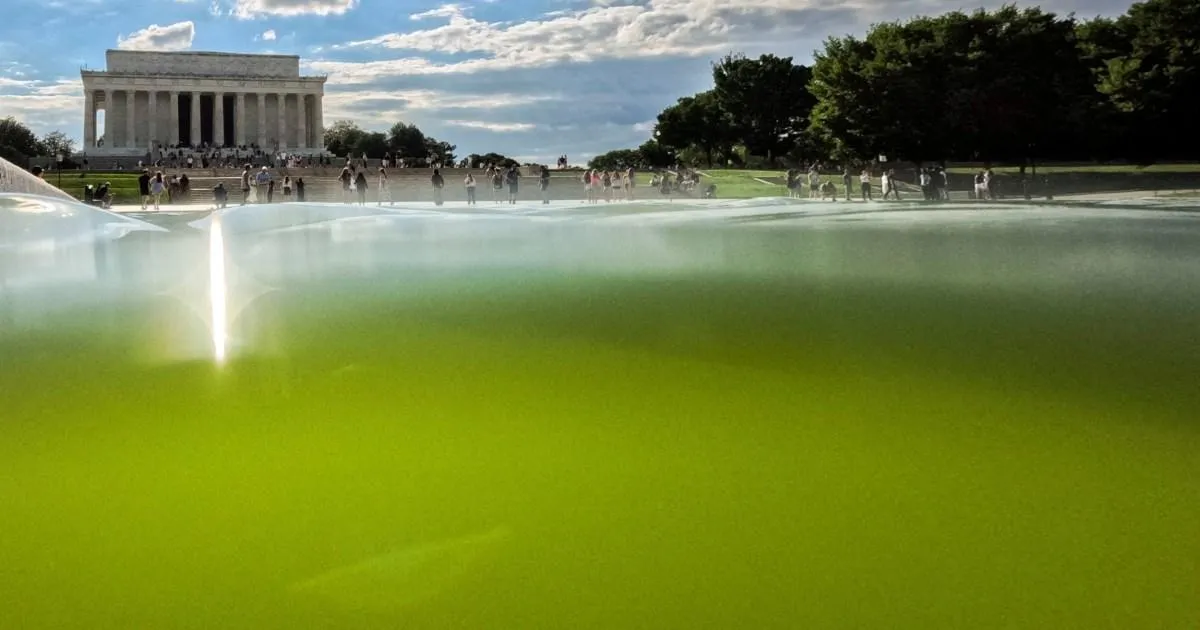
Despite the president’s recent unveiling of the renovated pool, a sudden algae bloom has turned the water green, casting doubt on the renovation’s success. The algae has not only muddied the pool’s appearance but also highlighted issues with its maintenance. Efforts to treat the water with hydrogen peroxide have been deployed, yet the algae’s rapid spread suggests challenges in managing the pool’s ecosystem. Critics argue that this problem underscores a lack of oversight in the high-profile project.
Public Reaction and Debate
Robert Dale of Edwards, Colorado, expressed disappointment, stating that he would like his money back and questioned whether the budget could have been better spent elsewhere. ‘After seeing this, I want my money back. I think our resources could be used a lot better elsewhere,’ Dale told Reuters. His comments reflect growing public skepticism, as the algae bloom has become a focal point of debate over the renovation’s value. Social media platforms have amplified these concerns, with users comparing the situation to earlier controversies involving the White House’s exterior.
Environmental experts note that algae blooms are common in urban water features, often caused by nutrient buildup or poor circulation. While hydrogen peroxide is a standard remedy, its immediate necessity highlights potential gaps in the pool’s maintenance plan. The Department of the Interior defended the project, claiming the water remains ‘crystal clear’ and attributing the algae to ‘fake news’ reports. Yet, the visible green hue has challenged this narrative, drawing comparisons to the aftermath of the Iranian Navy’s damage in the Persian Gulf.
Amid the algae issue, the broader scope of Trump’s capital improvement plans remains under scrutiny. The reflecting pool is part of an initiative that includes the East Wing’s demolition for a new ballroom and a massive arch near Arlington National Cemetery. These projects, which have already sparked controversy, are framed as symbols of Trump’s commitment to revitalizing national landmarks. However, the algae problem has intensified calls for an independent review of the entire program.
Supporters of the renovation argue that the pool’s condition is a minor setback and that the overall investment in the nation’s capital is justified. They emphasize that the project includes upgrades to the pool’s filtration system, lighting, and walkways. Yet, the algae’s presence has exposed vulnerabilities in these improvements, prompting critics to question the long-term sustainability of the design. Environmental advocates urge the government to prioritize maintenance strategies that prevent recurring issues, rather than relying on temporary fixes.
As the algae spreads, the debate over the renovation’s cost-effectiveness intensifies. While the $14.7 million allocated to the pool was intended to restore its grandeur, the visible signs of wear suggest the project may not have achieved its goals. The controversy has become a symbol of broader concerns about Trump’s infrastructure spending and the public’s perception of its value. With the reflecting pool’s condition now a topic of national conversation, the administration faces pressure to address the issue promptly.