

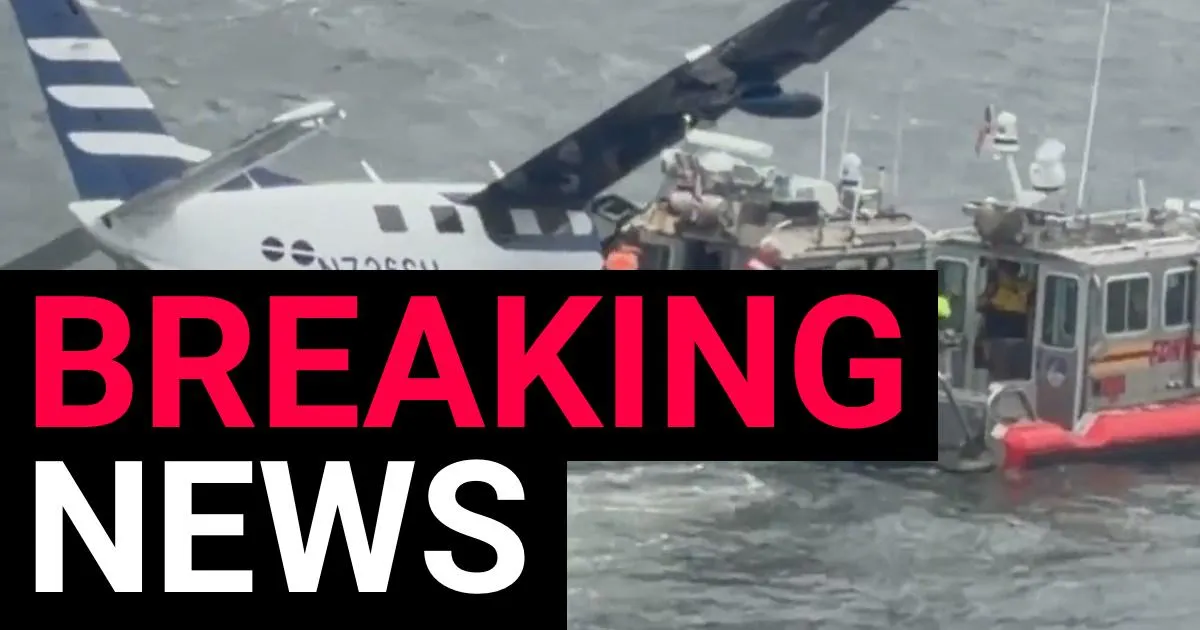
Plane carrying eight plunges into New York City’s East River
Plane carrying eight plunges into New York – On Sunday morning, a seaplane carrying eight individuals experienced a dramatic crash landing in the East River, prompting an emergency response that ultimately led to the safe retrieval of all passengers. According to officials, the incident occurred with minimal injuries, as two individuals sustained minor wounds and were evaluated by first responders. The rest of the crew and passengers were accounted for and removed from the water without further complications.
Chaotic Scene Captured on Video
Footage from the scene reveals the seaplane bobbing in the choppy waters of the East River shortly after the incident. Emergency boats swiftly arrived to assist, with crews working quickly to extract the passengers. The video, which was shared online, shows the aircraft struggling to stay afloat before being stabilized and towed to a nearby dock. The footage highlights the tense moments as the vessel hovered near the surface, emphasizing the rapid action taken to prevent a more severe outcome.
“I didn’t see the impact, only all the emergency boats rushing over after,” said a witness to Metro, who was on-site during the event. The statement underscores the confusion that followed the crash, with onlookers and responders scrambling to ensure everyone’s safety.
Officials noted that the seaplane’s near-capsize was a close call, with the pilot and passengers navigating the challenging conditions with quick thinking. While the exact cause of the incident remains under investigation, the authorities confirmed that the situation was managed effectively, preventing additional casualties. The aircraft, which was operating in the early hours of the day, is believed to have encountered mechanical difficulties or adverse weather conditions, though this has yet to be confirmed.
Brooklyn Bridge Fire Adds to the Day’s Drama
Less than 24 hours later, New York City found itself in the midst of another emergency as the iconic Brooklyn Bridge caught fire during a fireworks display celebrating the nation’s 250th birthday. The spectacle, which had drawn crowds to the East River crossing, was abruptly interrupted when thick black smoke began to rise from the bridge’s structure at around 9:32 PM.
Firefighters were called to the scene quickly, with the blaze spreading across two sections of the bridge before being contained by 10:00 PM. The Brooklyn Bridge was closed to traffic for an additional 30 minutes as crews worked to fully extinguish the flames. Authorities stated that the fire was “very likely” caused by the pyrotechnics, suggesting that the fireworks display, which had already captivated the city, inadvertently led to a hazardous situation.
The aftermath of the fire saw the bridge temporarily out of service, with emergency services conducting inspections to ensure no structural damage compromised its safety. While the flames were eventually extinguished, the incident added to the day’s list of unexpected events, showcasing the challenges of hosting large public events in a densely populated urban area.
Timeline of Events
The seaplane incident and the Brooklyn Bridge fire unfolded in quick succession, each contributing to the city’s bustling schedule of celebrations and activities. The seaplane crash occurred in the early hours of the morning, while the fire erupted during the evening’s Fourth of July display. This timeline highlights the unpredictable nature of urban safety incidents, even during festive occasions.
Just as the fire was under control, a new update was released: at least 10 people had been rescued from the plane crash, marking a positive outcome for the day’s sequence of emergencies. This figure includes both the initial eight passengers and two additional individuals who were found nearby. The report, shared on social media with the hashtag #NYP, underscores the coordinated efforts of emergency services in handling multiple crises simultaneously.
Residents and tourists alike were left in awe of the city’s resilience, with both incidents serving as reminders of the importance of preparedness. Despite the chaos, no one was injured in the fire, and the seaplane’s passengers were reported to be in stable condition. The dual events also sparked discussions about safety protocols for air and land-based celebrations in New York City.
ReCAPTCHA and Privacy Notice
The article is protected by reCAPTCHA, which ensures that only human users can access the content. This system uses the Google Privacy Policy and Terms of Service to safeguard user data. Your information will be used in accordance with the site’s Privacy Policy, which outlines how personal details are collected and processed.
While the primary focus of the article remains on the two incidents, the inclusion of the reCAPTCHA and privacy terms reflects the broader context of digital security and user trust in online platforms. These measures are essential in maintaining the integrity of the information shared, particularly in the wake of unexpected events that draw significant public attention.
The East River, a popular location for both air and water-based activities, has now become a focal point for emergency responses. The seaplane crash and fire incidents highlight the diverse risks associated with urban infrastructure and the need for continuous monitoring and readiness. As the city continues to host large-scale events, the combination of natural elements and human activity presents both opportunities and challenges.
With the seaplane safely retrieved and the Brooklyn Bridge restored, the city’s emergency services have been praised for their swift action. The coordination between air and land-based responders demonstrated the effectiveness of New York’s preparedness systems, even in the face of unforeseen circumstances. While the events of the day were dramatic, they ultimately reinforced the city’s ability to manage crises with professionalism and efficiency.
Residents expressed relief that the incidents had been resolved without major casualties. The Fourth of July celebrations, which were meant to mark a joyous occasion, instead became a test of the city’s emergency protocols. The dual emergencies served as a reminder of the ever-present need for vigilance, particularly during times of heightened activity and excitement.
As the sun rose over Manhattan, the East River remained a symbol of both the city’s vibrancy and its vulnerability. The seaplane crash and Brooklyn Bridge fire are now part of the city’s history, with details being shared widely across media platforms. The events also prompted further analysis of safety measures, ensuring that future celebrations can be even more secure and enjoyable.
In summary, the day began with a near-disaster at the water’s edge and concluded with a fire that disrupted one of New York’s most recognizable landmarks. Both incidents, though separate in nature, underscore the importance of emergency preparedness and the adaptability of city services in handling unexpected challenges. As investigations continue, the focus remains on ensuring the safety of all who participate in the city’s vibrant events.