

Rare Sea Hare Spotted on Anglesey Beach Sparks Scientific Curiosity
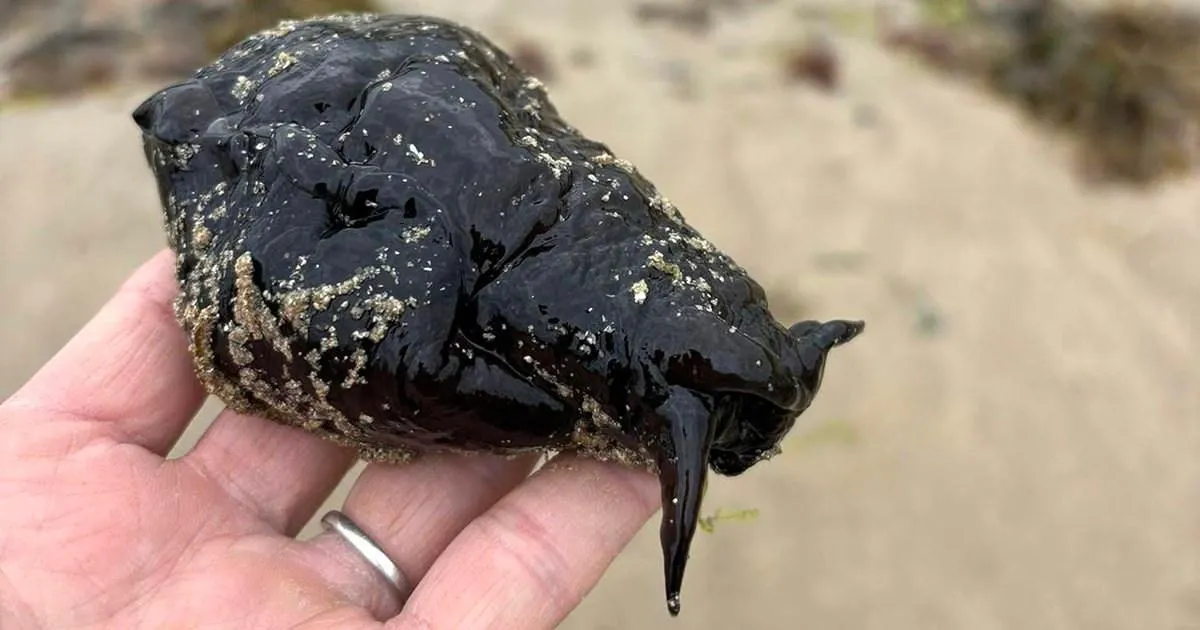
Mystery over rare sea slug found – A massive marine slug was discovered stranded on Anglesey’s shores by a dogwalker, leaving experts puzzled. The creature, initially thought to be an unusual find, was later identified as a sea hare—a marine snail more commonly known as a ‘sea slug’—raising questions about its presence in the region.
A Rare Encounter in a Changing Climate
While smaller species of sea hares are commonly found in the UK, this particular variant is considered a rare sight, typically inhabiting the Mediterranean region. Emma Leese, the dogwalker, stumbled upon the creature approximately 20 meters from the water’s edge during low tide. Concerned that local dogs might investigate the strange find, she carefully returned it to the sea.
“When back in water, it sort of unfolded,” she said. “It began wriggling—slug-like—and its stalks began going back up.”
Sea slugs, unlike their terrestrial counterparts, cannot absorb atmospheric oxygen, making them particularly vulnerable to desiccation when stranded on land. This explains why their survival depends heavily on quick rehydration. When disturbed in water, they emit a striking cloud of purple ink, believed to be sourced from the red algae they consume.
Defensive Mechanisms and Evolutionary Adaptations
Similar to the octopus, this ink is hypothesized to serve as a defensive mechanism, either creating a visual barrier or acting as a distraction for predators. Frankie Hobro, owner and director of Anglesey Sea Zoo, noted that the observed specimen is likely a depilatory sea hare, a less common UK species that has been sporadically recorded in southwest Britain.
As ocean temperatures rise, these organisms are gradually shifting their habitats northward, leading experts to anticipate increased sightings in the coming years. This migration could signal broader ecological changes driven by climate warming, potentially altering marine ecosystems in unexpected ways.
Global Distribution and Local Sightings
According to the Global Biodiversity Information Facility, depilatory sea hares have been documented in three confirmed instances on the Isle of Man, with a single record in north Scotland. Wales remains devoid of confirmed sightings, though there are anecdotal reports from Pembrokeshire, suggesting the species may be more widespread than currently recorded.
Sea hares belong to the mollusk family, sharing a distant kinship with common garden snails. Unlike their terrestrial counterparts, they possess a delicate, translucent internal shell instead of an external one. Their modified fleshy mantles have evolved into expansive, wing-like flaps, enabling them to navigate water with surprising agility.
Size and Morphological Differences
Much more commonly found in the UK is the native spotted sea hare, which typically measures around 7 cm in length but can grow up to 20 cm. In contrast, the depilatory sea hare, however, is significantly larger, reaching up to 40 cm, which makes it considerably bulkier than its British relatives. This size difference underscores the unique adaptations of the depilatory species, which may reflect its ecological niche.
Frankie Hobro emphasized that the depilatory sea hare’s larger size and distinct features distinguish it from other local species. Its ability to swim gracefully through water, aided by its modified flaps, highlights the evolutionary versatility of these creatures.
Handling and Conservation Advice
Frankie advised that individuals encountering a sea hare should avoid direct contact without gloves, as their skin retains potent chemicals from their algal diet. These compounds can be irritating to human skin, making the creatures ‘quite revolting to touch’ as he put it.
“He emphasized that the creatures are ‘quite revolting to touch’ due to their strong suction capabilities, advising that they should never be forcibly removed from rocks, as this could cause harm.”
Additionally, Frankie recommended careful handling to prevent damage to the sea hare’s delicate structure. “I always say it’s best to leave marine creatures undisturbed, as they may not always be what they appear to be,” he concluded.
A Symbol of Oceanic Change
The discovery of the depilatory sea hare in Anglesey could mark a shift in marine biodiversity patterns. As the seas warm, species like this are increasingly observed moving northward, adapting to new environments. This trend may offer insights into how climate change is reshaping oceanic ecosystems, with potential implications for local wildlife and conservation efforts.
Such events also underscore the importance of citizen science in marine biology. Emma Leese’s prompt action in returning the slug to the sea exemplifies how everyday observations can contribute to scientific understanding. Her vigilance helped preserve the creature’s survival, highlighting the role of public engagement in protecting vulnerable species.
The depilatory sea hare’s presence in UK waters may become more frequent, prompting further study of its behavior and ecological impact. While its arrival is a curiosity, it also reflects the dynamic nature of marine life in response to environmental shifts. Researchers are keen to monitor these occurrences, as they could signal broader trends in species distribution and adaptation.
This site is protected by reCAPTCHA, which adheres to the Google Privacy Policy and Terms of Service. User information is collected in accordance with our Privacy Policy.