
Oil spills from the Iran war are visible from space
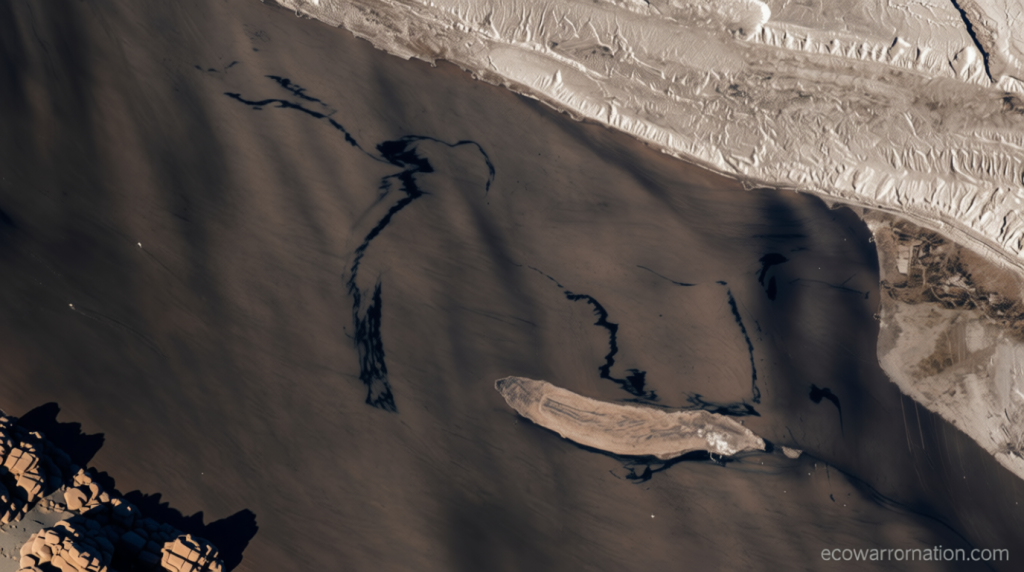
Oil spills from the Iran war are visible from space
Satellite Imagery Reveals Multiple Oil Spills
Recent strikes by Iranian forces and US-Israeli coalition have led to significant oil spills in the Persian Gulf, as captured by satellite images. These visuals highlight the extent of damage to oil infrastructure and maritime vessels in the region. The spills, which span over five miles near Iran’s Qeshm Island in the Strait of Hormuz, underscore growing concerns about environmental risks.
The Impact on Coastal Communities and Marine Life
Experts warn that the oil leaks could trigger a major ecological disaster, threatening both human populations and the region’s marine ecosystems. The spills may disrupt coastal livelihoods, particularly for communities reliant on fishing. Meanwhile, wildlife such as turtles, dolphins, and whales faces risks from ingesting or becoming entangled in the oil. Desalination plants, vital for nearly 100 million people, could also suffer from contaminated water sources.
“The hit on Lavan is a major environmental emergency,” said Wim Zwijnenburg, a project leader at Dutch peace organization PAX. He noted that at least five locations on Lavan Island were damaged, leading to spills that have now reached Shidvar Island—a protected site rich in wildlife.
Details from the Ground and Air
Geolocated videos shared on social media, analyzed by CNN, depict a large fire at an Iranian oil refinery. Additional images show oil spreading near Lavan Island following an attack described by Iranian state media as being “by enemies.” The Islamic Revolutionary Guard Corps claimed to have targeted fuel facilities in Gulf nations, including Kuwait, on April 6 as retaliation for an attack on a petrochemical complex in southwestern Iran.
“Oil spills can have huge, wide-ranging impacts, affecting the entire ecosystem from microorganisms to fish, birds, and marine turtles that depend on mangrove habitats,” stated Greenpeace Germany’s Nina Noelle. She emphasized the difficulty of cleanup efforts due to structural complexity, limited access, and harsh conditions, compounded by the ongoing conflict.
Ecological and Economic Consequences
With 75 large oil tankers carrying nearly 19 billion liters of crude oil in the Gulf, the potential for widespread harm is severe. The spills risk contaminating fish stocks, which are critical for coastal economies. Zwijnenburg added that the situation could worsen if more ships are damaged, making containment and recovery efforts increasingly challenging.
