
Reform Councillor Apologizes After Posing With Poster Endorsing Jimmy Savile
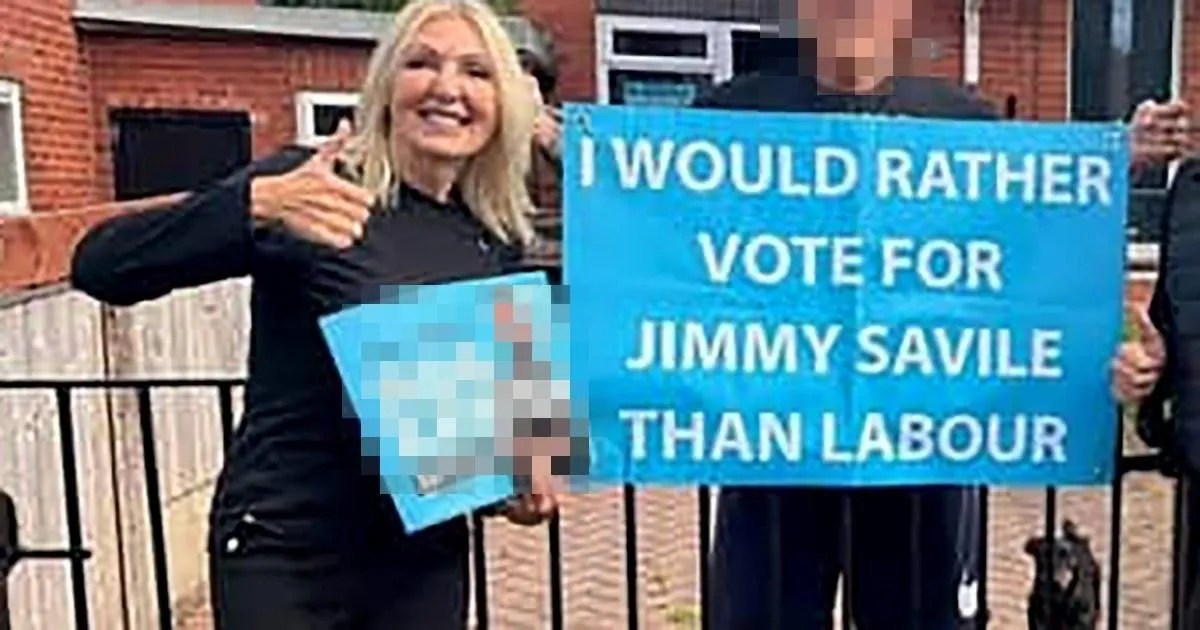
Reform councillor apologises after posing – A Reform UK councillor recently issued an apology after being seen with a poster that linked the Labour Party to the late BBC presenter Jimmy Savile. The incident, which sparked public backlash, occurred during the Makerfield by-election campaign in Wigan, where the councillor, Lilian Rogers, shared a photo of herself standing beside a handmade sign. The sign, which read: “I’d rather vote for Jimmy Savile than Labour,” appeared to endorse the controversial figure known for his alleged sexual misconduct.
Controversial Image Sparks Outcry
Lilian Rogers, elected to Wigan Council just weeks prior, was captured in the image with the sign during a hectic day of canvassing. At the time, she claimed the poster was perceived as harmless, but she later admitted to overlooking its implications. “While I saw the sign at the time, I want to be absolutely clear: I completely failed to realise its sickening implications or context,” she wrote on Facebook. The councillor emphasized that she had no prior knowledge of Savile’s legacy of abuse, which includes hundreds of allegations of sexual offences made public after his death in 2011.
“Had I understood the implication for even a second, I would never have associated myself with it or agreed to be photographed,” Rogers stated. Her apology followed a wave of criticism from local officials and the public, who highlighted the dissonance between her political stance and the association with a figure synonymous with sexual misconduct. “I am deeply sorry for any distress this situation has caused to anyone who has seen it, and I am incredibly disappointed in my own naivety in allowing myself to be compromised in this way,” she added.
The poster, which was part of a broader campaign strategy, became a focal point of debate. While the image was intended to satirize Labour’s policies, it inadvertently drew comparisons to Savile, a man whose misconduct had shaken the public trust in institutions like the BBC. The sign’s placement during the by-election raised questions about the campaign’s messaging and the potential for unintended symbolism. Rogers’ actions, though unintentional, underscored the challenges of navigating sensitive political imagery in a fast-paced electoral environment.
By-Election Results Highlight Divided Sentiment
The Thursday by-election saw a decisive victory for Andy Burnham, the mayor of Greater Manchester, who secured more than 9,000 additional votes compared to Reform’s second-place finisher, Robert Kenyon. Burnham’s win reflected the electorate’s preference for experienced leadership, yet the incident involving Rogers introduced a layer of controversy. While the election results were clear, the poster’s symbolism lingered, drawing attention to the intersection of political messaging and historical scandals.
Savile, who passed away in 2011, became a household name for his alleged crimes, which spanned decades of abuse involving numerous victims. The accusations, which emerged after his death, led to a thorough examination of his career, particularly his work as a BBC presenter and DJ. The manual sign, which was a simple yet striking visual, juxtaposed his controversial legacy with the Labour Party, creating a powerful, if unintended, critique of political figures.
Rogers’ explanation for her actions included a reflection on the fast-paced nature of the campaign. “In the rush of a busy campaign day, it was viewed as entirely innocent,” she explained. Her admission of oversight highlighted the pressure faced by candidates during high-stakes elections, where the focus on winning can sometimes overshadow the deeper implications of their public appearances.
Political Condemnation and Institutional Response
The incident prompted swift condemnation from fellow councillors, who criticized the association with Savile. One local official, speaking to the Independent, remarked: “The poor victims of Jimmy Savile, what the hell are they thinking?” This sentiment echoed the frustration of many who felt the image trivialized the serious nature of the allegations against the former celebrity.
“The hell are they thinking?” the councillor questioned, emphasizing the emotional weight of Savile’s crimes and the need for political figures to be mindful of their public image. The criticism extended to the campaign’s creative choices, with some arguing that the sign’s simplicity made its impact all the more jarring.
Wigan Council confirmed it was investigating the matter under its code of conduct, which outlines standards for ethical behavior among elected officials. The inquiry aimed to determine whether the councillor’s actions constituted a breach of protocol, particularly given the timing of the by-election and the public’s heightened awareness of Savile’s legacy. The council’s response indicated a commitment to accountability, even as the incident became a topic of discussion in both local and national media.
The controversy also sparked a broader conversation about the role of symbolism in political campaigns. While posters and signs are often used to convey party values, they can also carry unintended weight, especially when tied to figures with a history of wrongdoing. Rogers’ apology served as a reminder of the importance of context in political imagery, and the need for candidates to engage with the full scope of their associations.
As the investigation unfolds, the incident may influence perceptions of Reform UK’s credibility. The party, which has positioned itself as a challenger to traditional political parties, now faces scrutiny over its messaging. Meanwhile, the public continues to weigh the councillor’s intent against the impact of her actions, raising questions about how political figures navigate the delicate balance between creativity and responsibility in their campaigns.
Wigan Council’s handling of the situation will also be a key factor in determining its effect on the local political landscape. The code of conduct investigation is expected to consider not only the immediate actions of Rogers but also the broader implications for the council’s reputation. The case highlights the evolving standards for accountability in local government, where even a single misstep can amplify scrutiny in an era of increased transparency and public demand for ethical leadership.
As the debate over the poster continues, it serves as a case study in the complexities of political communication. The image, once seen as a lighthearted campaign tactic, now stands as a symbol of both the challenges and responsibilities of representing the public. For Lilian Rogers, the apology marks a step toward reconciliation, but the incident is likely to remain a point of discussion in the political sphere for some time to come.
This site is protected by reCAPTCHA and the Google Privacy Policy and Terms of Service apply. Your information will be used in line with our Privacy Policy.