
Russians fight each other at petrol stations after drone strikes hit Putin’s fuel supply
Russians fight each other at petrol – The ongoing conflict has sparked a new wave of chaos at fuel stations across Russia, as motorists engage in heated disputes over the dwindling supply of gasoline. Ukrainian drone attacks on critical oil infrastructure have disrupted the nation’s energy distribution, leaving drivers to scramble for fuel amid rising prices and scarcity.
Residents in various regions are now waiting for hours—sometimes days—to refuel their vehicles. This situation has created a sense of urgency, with people trading patience for confrontation as they vie for limited resources. The war’s domestic toll is becoming increasingly visible, as the strain on everyday life pushes frustration toward the highest levels.
One such incident occurred in Siberia, where a 29-year-old woman named Tanya spent 13 hours at a petrol station to secure just half a tank of fuel. She expressed her discontent in a
“He should stop this senseless conflict and let us live normally.”
Her words reflect a growing sentiment among Russians that the war is not only affecting military efforts but also their ability to sustain basic needs.
As the fuel crisis deepens, tensions are spilling over into public spaces. In Serov, a mining town in Sverdlovsk Oblast’s western region, a confrontation broke out when a man assaulted a woman and shouted at a group of others over their place in the queue. The altercation escalated into a shouting match, highlighting the desperation driving people to challenge each other.
Meanwhile, in Siberia, two women argued fiercely at a petrol station, disputing who was ahead in the line. The argument took a sharp turn when one woman called out an insult, prompting the other to threaten retaliation. The exchange grew intense, with the threat of violence underscoring the rising tempers among those struggling to access fuel.
Further south, in Irkutsk, a man in jeans and a black t-shirt vented his frustration by striking another motorist through his car window. The incident, which occurred at a petrol station, showcased the physical manifestations of the fuel shortage, as people vent their anger on fellow drivers in crowded queues.
Compounding the issue, criminal groups are capitalizing on the scarcity, inflating prices to three times the market rate. In one region, authorities had to step in after a syndicate was discovered reselling fuel at inflated costs, exploiting the situation for profit.
Broader Impact of the Crisis
The disruption extends beyond individual stations, creating a ripple effect across the nation. With fuel shortages spreading to all 83 regions, the government is under pressure to address the growing unrest. President Putin has acknowledged the challenges, stating that Ukrainian strikes on infrastructure have caused “problems” for both drivers and businesses. However, he insisted that fuel reserves are only 4% lower than the previous year, framing the issue as temporary rather than systemic.
Despite this, the reality on the ground tells a different story. Queues have become common, and the availability of specific gasoline types remains inconsistent. The president’s attempt to reassure the public included a promise to boost supplies, particularly by sea to Crimea, which has almost run dry due to land route disruptions.
While Putin’s strategy focuses on logistics, the psychological toll of the crisis is evident. Many Russians are feeling the weight of the war’s consequences, from higher transportation costs to reduced access to essential goods. This has led to a shift in public perception, with the president increasingly seen as a symbol of the hardship faced by ordinary citizens.
The situation has also impacted agricultural sectors, which rely heavily on fuel for operations. Putin noted the difficulties faced by farmers during the summer period, emphasizing the need for coordinated efforts to stabilize the supply chain. Yet, the immediate effects on daily life suggest that the crisis may require more than policy adjustments to resolve.
Public Response and Sentiment
As the queues grow longer and the arguments more frequent, the public’s mood is becoming more volatile. In some areas, drivers have been reported attempting to bypass lines, leading to physical altercations and a breakdown in order. This behavior reflects a broader dissatisfaction with the war’s impact on stability and economic security.
Analysts suggest that the crisis could intensify as the conflict continues. With fuel prices rising and supply chains strained, the risk of further social unrest increases. However, the government’s response to date has focused on maintaining morale through promises of increased production and distribution.
Despite these efforts, the atmosphere at petrol stations serves as a microcosm of the broader societal stress. People are not only competing for fuel but also for a sense of normalcy, as the war reshapes their daily routines and routines. The incidents described in the article illustrate how the conflict’s economic fallout is manifesting in unexpected ways, from arguments over fuel to criminal exploitation of shortages.
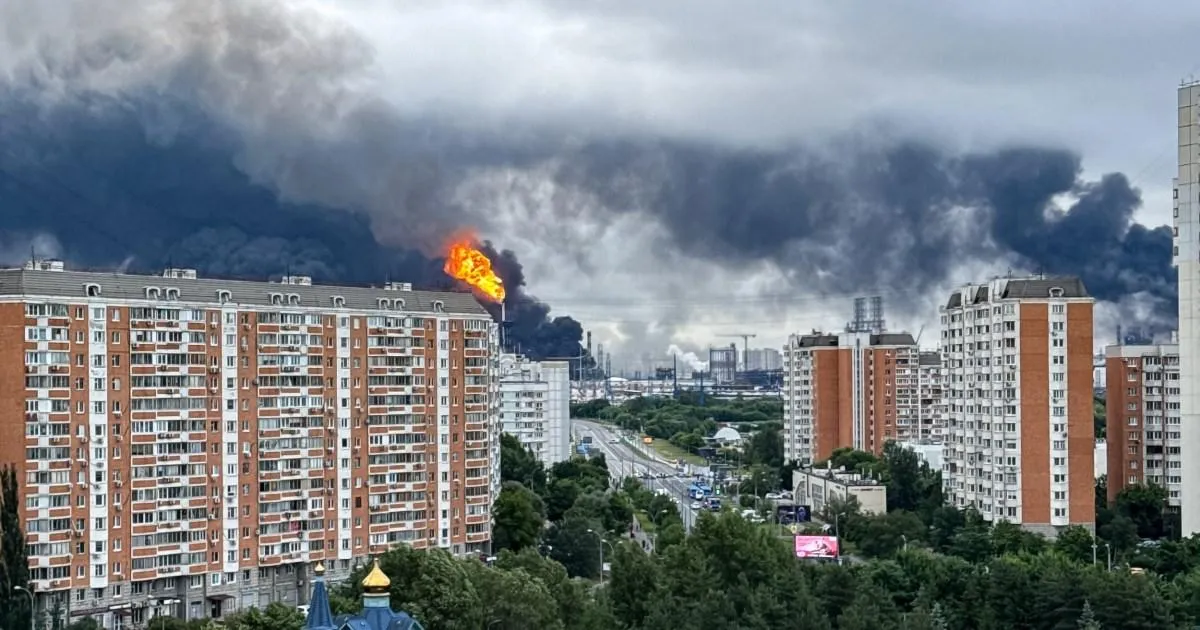
The impact of the drone strikes on Gazprom Neft’s Moscow refinery has been a catalyst for this turmoil. Ukrainian forces have targeted key facilities, reducing the country’s oil production capacity and disrupting distribution networks. This has forced Russians to navigate a fragmented system, where availability is unpredictable and competition is fierce.
As the situation unfolds, the question remains: how long can this pressure be sustained? While Putin’s administration claims reserves are stable, the reality for many drivers suggests otherwise. The ongoing conflict continues to test the resilience of the Russian people, with fuel stations becoming battlegrounds for a nation in crisis.