
5 ways your doctor may be using AI chatbots — and why it matters
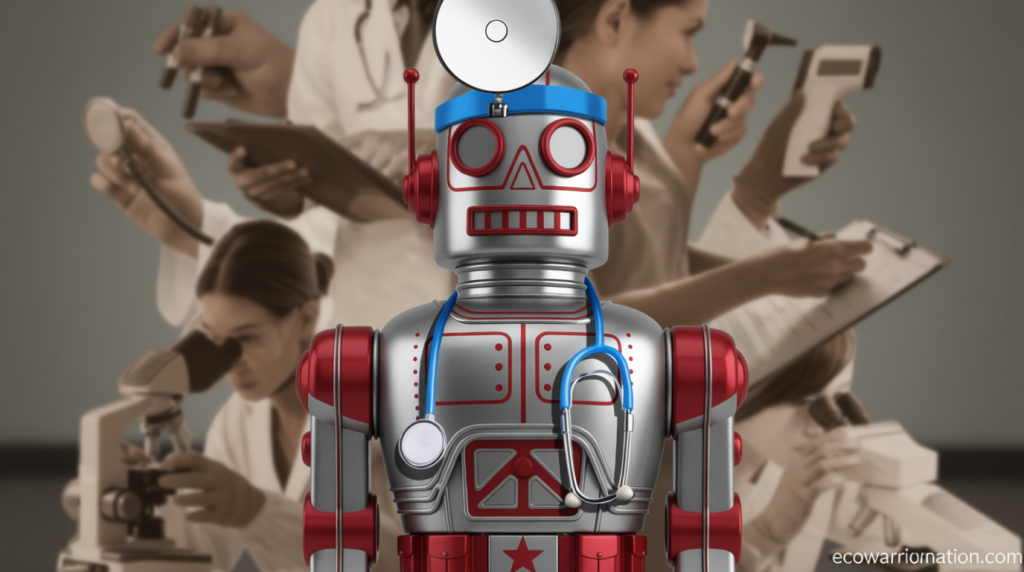
5 Ways Your Doctor May Be Using AI Chatbots — and Why It Matters
AI chatbots are increasingly becoming a go-to resource for millions of Americans seeking health information. Healthcare professionals, including doctors and medical trainees, have also embraced these tools, though their integration into clinical practice takes unique forms. A prominent medical AI company’s CEO recently highlighted that over 100 million individuals in the U.S. received care from physicians utilizing their platform last year.
Accuracy and Expertise
General-purpose chatbots like ChatGPT are not favored by doctors for critical decisions. Many argue these platforms lack the precision needed for medical contexts. “ChatGPT is like your crazy uncle,” remarked Dr. Ida Sim, a UCSF professor studying data-driven healthcare improvements. She emphasized that medical AI chatbots are more reliable, rooted in peer-reviewed research and clinical guidelines, which gives them an edge in delivering consistent, accurate insights.
Staying Updated in a Fast-Paced Field
With millions of research papers published annually, keeping pace is a challenge. Dr. Jared Dashevsky, a resident physician at Mount Sinai, noted that continuous learning would require 18 hours of daily focus. To manage this, doctors now rely on specialized AI chatbots that scour medical literature, offering concise summaries and links to essential studies. Dr. Jonathan H. Chen, from Stanford Medicine, explained how these tools streamline access to up-to-date information, benefiting trainees juggling long schedules.
Efficiency in Administrative Tasks
AI chatbots also assist in drafting patient summaries, which are accessible via online portals. This helps doctors monitor progress and coordinate care across teams. Dashevsky argued that AI’s ability to process detailed records reduces the risk of human error, even as concerns about accuracy remain. He pointed out that administrative duties, such as insurance-related tasks, consume nearly nine hours weekly for average physicians, costing healthcare systems an estimated $26.7 billion yearly.
Privacy Risks with Shadow AIs
Despite their benefits, some doctors use unapproved AI chatbots, known as shadow AIs, for tailored advice. These platforms often claim HIPAA compliance, but Iliana Peters, a Polsinelli healthcare lawyer, clarified that the term applies only to government regulators. “HIPAA compliance” by private companies is misleading, she explained, as data uploaded to such tools might not be adequately protected. Dr. Carolyn Kaufman, a Stanford resident, echoed this, noting that patient information is frequently shared with these systems, raising concerns about data commodification.
What to Consider Before Using AI
While AI chatbots offer efficiency, doctors caution against overreliance. They stress the importance of verifying AI-generated summaries and ensuring data privacy. As the technology evolves, its role in healthcare continues to expand, balancing innovation with the need for transparency and security.
