
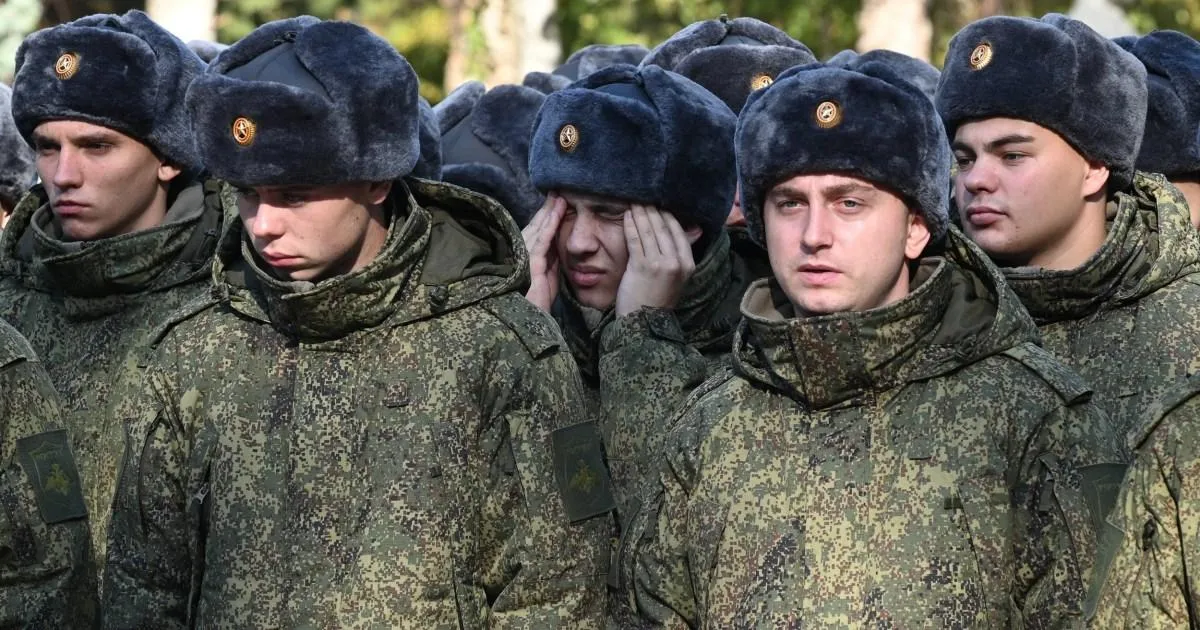
Russian Recruits Expected to Survive Just ’30 Minutes’ on Frontline
Russian recruits expected to survive for just – More than five years into Russia’s invasion of Ukraine, the war has claimed over half a million lives, with fuel shortages and critical infrastructure destroyed. The toll on the nation’s military and civilian population continues to mount, raising questions about the sustainability of Putin’s campaign. Reports now suggest that Russian soldiers are not only being overwhelmed quickly but are often eliminated within minutes of engaging in combat.
Since the start of the “special military operation,” which has now outlasted the First World War and persisted longer than Russia’s conflict against Nazi Germany, the situation on the frontlines has grown increasingly dire. According to new analyses, the survival rate of recruits has plummeted, with some estimates indicating that they may endure only a fraction of an hour before facing fatal consequences. This rapid attrition has forced the Kremlin to offer substantial incentives to attract new volunteers, including bonuses of up to £60,000 and debt relief of £105,000.
Professor Peter Frankopan, a global history expert at Oxford University, has highlighted the alarming pace of casualties. His research suggests that for every Ukrainian soldier, eight Russian recruits are either killed or severely wounded. This stark disparity underscores the challenges Russia faces in maintaining its military presence. “The rate of loss is accelerating,” Frankopan notes, emphasizing that modern technology and tactics have significantly altered the battlefield dynamics.
“Recruits are being killed within 20 minutes of stepping onto the battlefield. The war has become a relentless machine of destruction, and the human cost is staggering.”
Drone strikes, in particular, have played a pivotal role in this shift. Ukrainian forces have effectively used unmanned aerial vehicles to target not only military installations but also vital oil infrastructure, crippling Russia’s ability to sustain its operations. The reliance on drones has exposed vulnerabilities in Russian defenses, leading to a rapid depletion of manpower and resources. As a result, some soldiers now survive only 10 days to three weeks before being deployed to the frontline, according to insights from Russian military bloggers.
The war’s impact extends beyond the battlefield, affecting everyday life in Russia. Fuel shortages have become a daily struggle, with Putin admitting to senior officials that supply chain issues are causing significant disruptions. To address the crisis, he has proposed measures such as a diesel export ban, signaling the growing pressure on the nation’s logistics and morale. Consumers are bearing the brunt of these economic strains, and public sentiment is beginning to shift against the leader.
Business leaders have recently expressed “profound disappointment” in Putin’s leadership, citing a sense of impending crisis. One executive told the Guardian: “A growing catastrophe is looming, driven by utterly senseless, self-destructive decisions.” This sentiment reflects a broader disillusionment, as citizens question the long-term viability of the war effort and its impact on their future. “People who once defended Putin no longer do,” said one insider, adding that “any sense of a future has disappeared.”
Historical Parallels and Leadership Challenges
Professor Frankopan draws a striking comparison between Putin’s current predicament and that of Tsar Nicholas II, who was overthrown in 1917 after the First World War. He argues that Putin’s leadership style—marked by micromanagement, frequent absences, and erratic public appearances—mirrors the weaknesses of the late Romanov ruler. “Putin is acting like a tsar who has lost touch with reality,” Frankopan writes, suggesting that the war could trigger a similar collapse in power.
The professor also warns that Putin is likely to resort to extreme measures to maintain control. This includes “pulling the heads of others under the water” to secure his position, a metaphor for sacrificing allies or critics to retain authority. “The consequences of his stepping down are unforeseeable,” he adds, “and could lead to imprisonment or even death.” These observations highlight the precarious balance Putin is attempting to maintain between military success and political stability.
Strategic Missteps and the Cost of War
Frankopan’s analysis underscores that Putin’s missteps have exacerbated the crisis. His decision to prolong the conflict without clear objectives has resulted in a loss of public support and increased casualties. The professor attributes the high attrition rate to a combination of outdated tactics and the integration of modern technology, which has made the war more lethal and unpredictable. “The war is not just a battle of armies—it is a battle of wills and strategies,” he states.
As the war continues to erode Russia’s resources and morale, the situation for recruits remains grim. The combination of drone warfare, artillery, and a lack of sufficient training has created a deadly environment where soldiers are quickly overwhelmed. This has led to a vicious cycle of loss, prompting the government to offer ever more generous bonuses to retain recruits. State media reports indicate that nearly 420,000 have signed one-year contracts to replace the fallen, a testament to the scale of the recruitment challenge.
The ongoing conflict has also disrupted daily life in Russia, with fuel shortages and economic instability creating additional stress. The public’s frustration is compounded by the perception that Putin is prioritizing war efforts over domestic needs. “The war is taking a toll not just on the military, but on the entire population,” Frankopan explains. “It has become a test of endurance, both for the soldiers and the civilians.”
Despite these challenges, the war continues to evolve. Recent reports suggest that Russian forces are now fighting among themselves at petrol stations, a stark symbol of the war’s impact on the nation’s infrastructure and supply chains. Such incidents highlight the growing desperation and the toll of prolonged conflict. As the war enters its fifth year, the question remains: how long can Russia sustain this pace of loss before the tide turns irreversibly?
Meanwhile, the international community watches closely. With the war’s duration and casualty rates surpassing historical benchmarks, the pressure on Putin to adapt or retreat has intensified. The professor’s insights serve as a reminder that while Russia’s military may be formidable, its ability to maintain long-term operations is now in question. “The war has become a mirror of its own destruction,” he concludes, “and Putin’s leadership is being tested like never before.”